

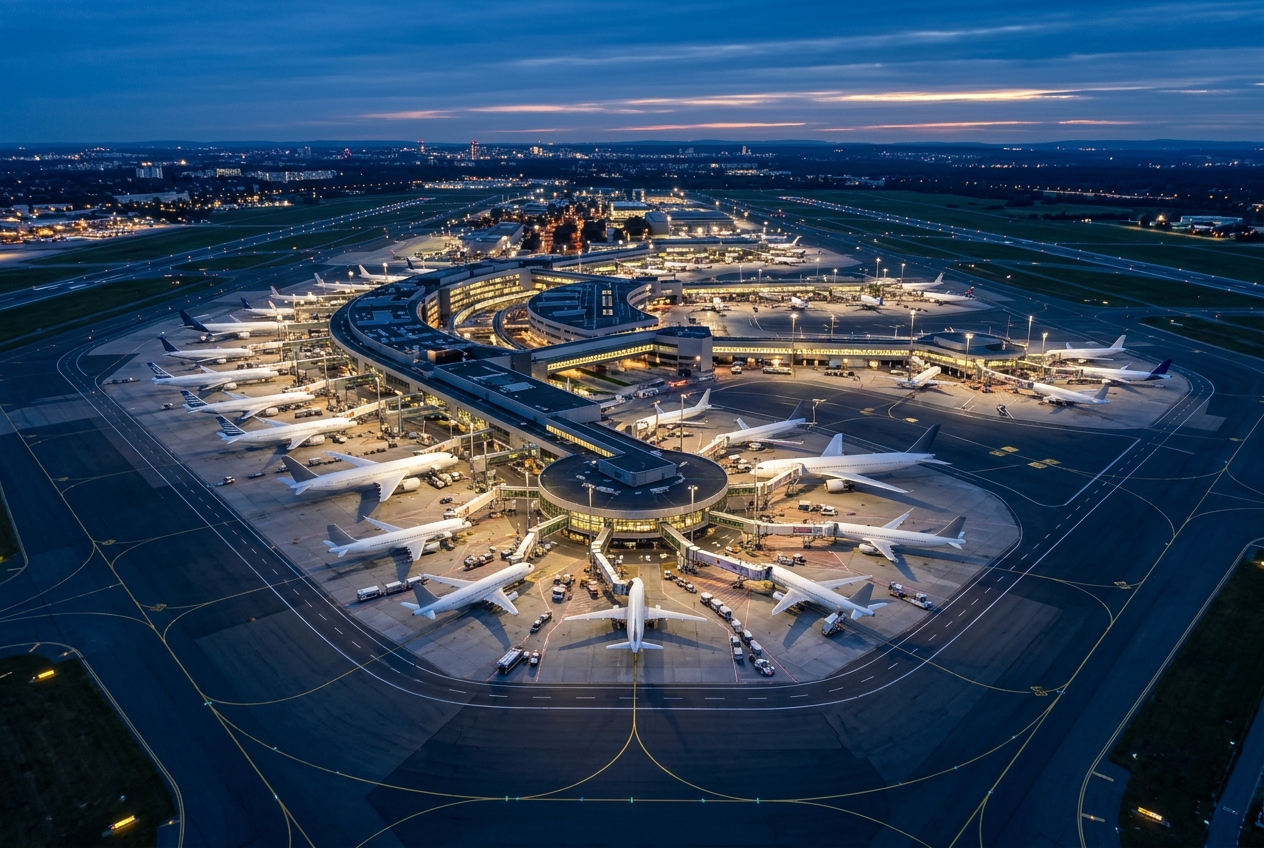
Remote Syrian desert gateway serving the Euphrates region.
Location
Deir ez-Zor, Syria
Deir ez-Zor Airport is a regional airport located in northeastern Syria, serving the city of Deir ez-Zor along the Euphrates River. It functions as the primary air link for the surrounding Al-Hasakah and Deir ez-Zor governorates, a region historically significant for oil production and agriculture.
The airport's operations have been severely disrupted by the Syrian Civil War, which began in 2011. The city and its airport were the site of prolonged conflict, including a notable siege and battles between Syrian government forces and various armed groups including ISIS. Regular commercial operations have been largely suspended or significantly reduced as a result of ongoing instability.
Prior to the conflict, Syrian Arab Airlines operated limited domestic routes connecting Deir ez-Zor to Damascus and other Syrian cities. The airport's future remains uncertain amid the broader humanitarian and political crisis affecting Syria.
Terminals
The airport has a single small terminal building suited to limited regional and domestic traffic.
Getting to & from
Ground transport to the city center is primarily by road, with taxis being the main option given limited public infrastructure.
Airlines here
Syrian Arab Airlines historically operated domestic routes from Deir ez-Zor, primarily to Damascus, though services have been largely suspended due to the civil war.
Notable facts
- ›Located in the Al-Hasakah and Deir ez-Zor region, an area historically important for Syrian oil production.
- ›The airport and surrounding city endured a prolonged siege during the Syrian Civil War, particularly from ISIS forces around 2014–2017.
- ›Regular commercial flights were largely suspended following the outbreak of the Syrian Civil War in 2011.
- ›The airport has been used for military and humanitarian supply operations during the conflict.
- ›Deir ez-Zor sits near the Euphrates River in eastern Syria, close to the Iraqi border.
This profile is provided for general information only. Details may be inaccurate or outdated — always verify with the airport's official website before acting on them.