

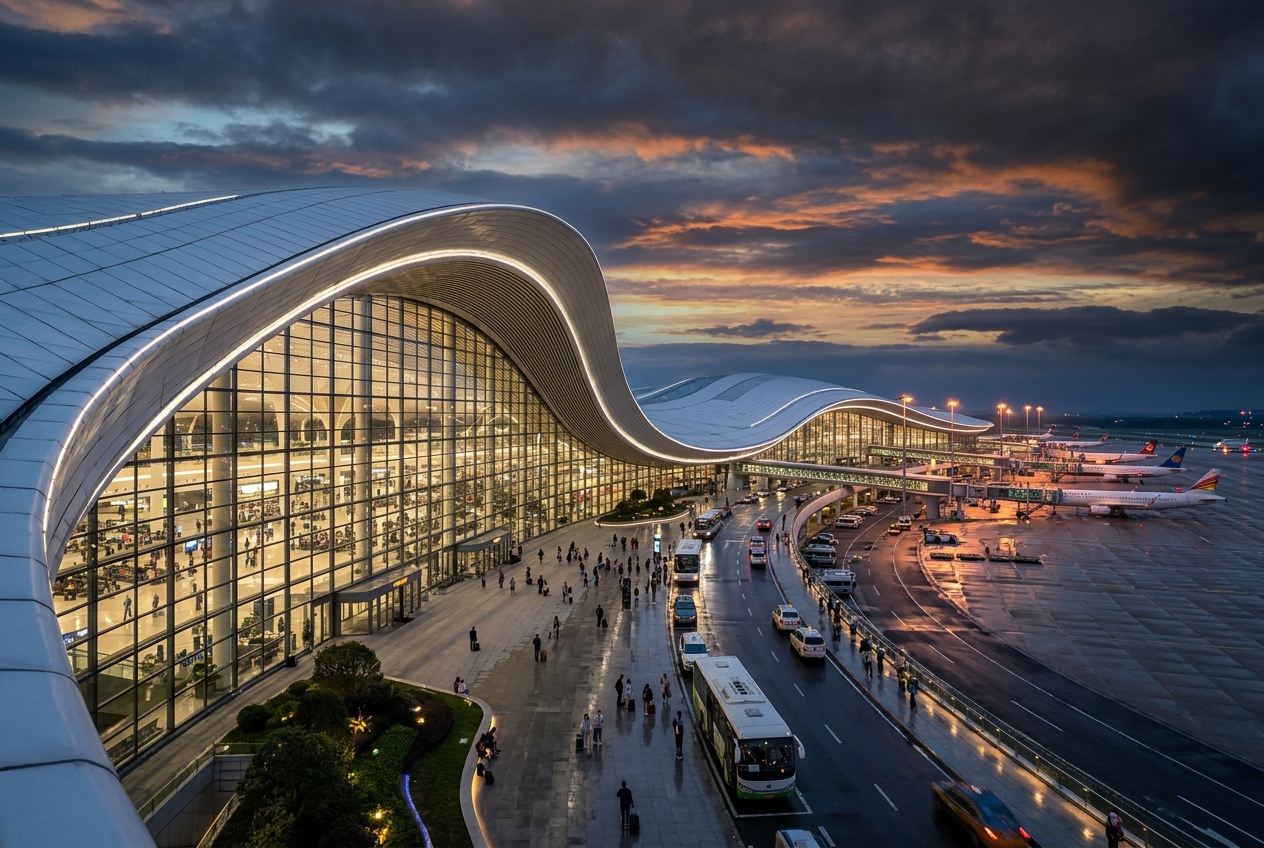
Small general aviation airport on Jeju Island, South Korea.
Location
Jeju Island, South Korea
Jeongseok Airport (IATA: JDG, ICAO: RKPD) is a small regional airport located in the eastern part of Jeju Island, South Korea. It primarily serves general aviation and flight training operations, and has historically seen limited scheduled commercial service.
The airport is situated near Seogwipo city in the southern part of Jeju Island and is distinct from the main Jeju International Airport (CJU), which handles the bulk of Jeju's commercial air traffic. Jeongseok has been used by flight training academies given its less congested airspace compared to the main airport.
Due to its limited commercial role, Jeongseok Airport sees relatively low passenger traffic and does not serve as a hub for any major airline. Its facilities are modest, reflecting its focus on training and general aviation rather than large-scale commercial operations.
Terminals
The airport has basic facilities with no significant commercial passenger terminal infrastructure.
Getting to & from
Ground transport options to and from Jeongseok Airport are limited, primarily relying on private vehicles and taxis.
Notable facts
- ›Jeongseok Airport is located in the eastern part of Jeju Island, separate from the main Jeju International Airport.
- ›The airport primarily supports general aviation and flight training operations.
- ›It has the IATA code JDG and ICAO code RKPD.
- ›Scheduled commercial service at this airport has been minimal or nonexistent for extended periods.
- ›The airport is sometimes used by flight training schools due to its less congested airspace.
This profile is provided for general information only. Details may be inaccurate or outdated — always verify with the airport's official website before acting on them.