AirlinesAirports.com
Powered by Google TranslateTranslate
Travel planning byTravelerPulse.pro
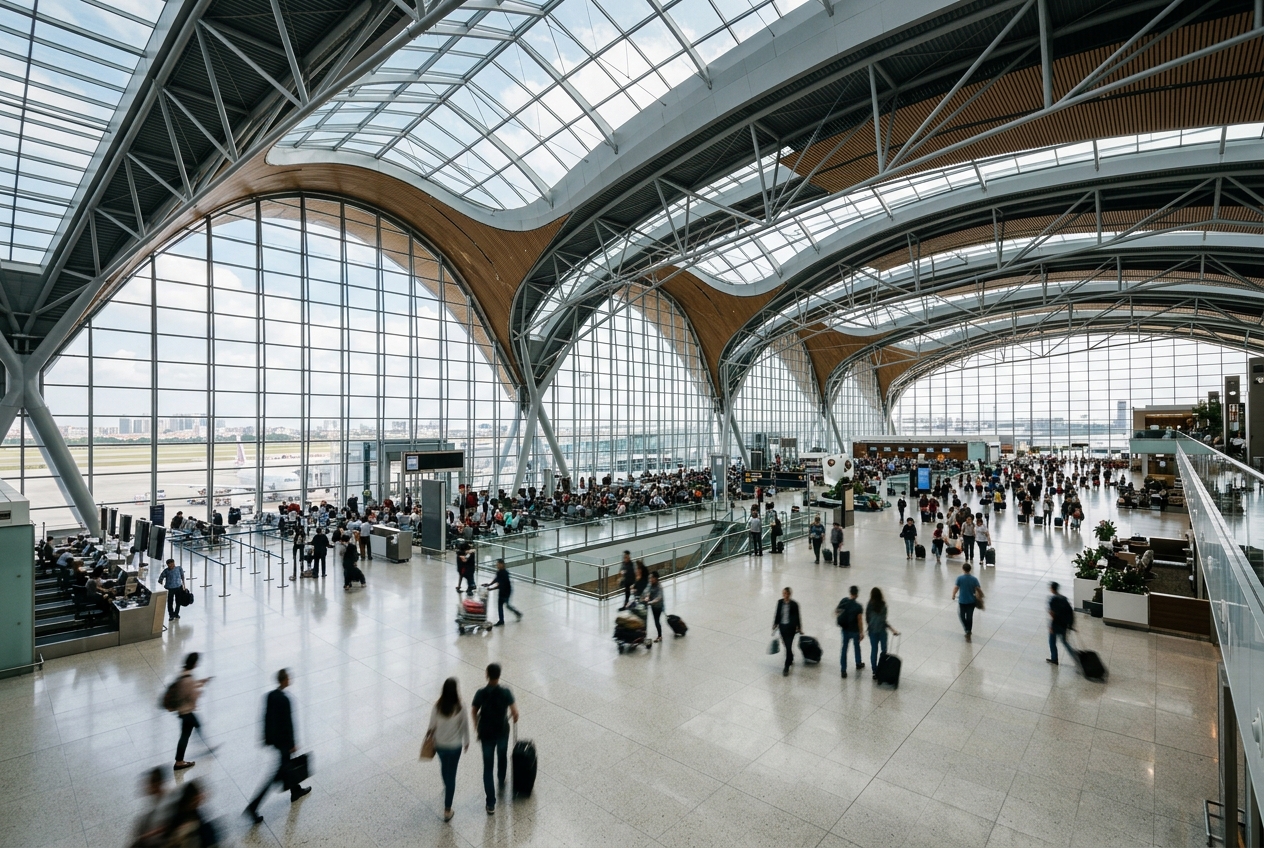
Gunsan Airport / Gunsan Air Base Regional Airport illustrationRegional Airport
Airports
KUVmedium airport

Gunsan Airport / Gunsan Air Base

Gunsan, South Korea
Explore Gunsan city guide Navigate to this airport
2
Routes out
1
Destinations
RKJK
ICAO
29 ft
Elevation
AirlinesAirports profile

Dual-use military and civilian airport on South Korea's west coast.

Opened
1938
Location
Gunsan, South Korea
Gunsan Airport, designated IATA code KUV and ICAO code RKJK, is a joint-use facility shared between the Republic of Korea Air Force and civilian commercial aviation. It is located near Gunsan, a port city in North Jeolla Province on the western coast of South Korea. The airport serves limited domestic routes, primarily connecting Gunsan to Jeju Island. Gunsan Air Base, which shares the facility, is a significant ROKAF installation and has historically hosted United States Air Force units as well. Due to its dual military-civilian nature, the airport operates under restrictions typical of air base facilities. Passenger traffic is modest compared to major South Korean airports, reflecting the regional character of Gunsan's economy.
Terminals
The airport has a single small civilian passenger terminal handling domestic traffic alongside the military air base operations.
Getting to & from
Ground transport options include local buses and taxis connecting the airport to downtown Gunsan.
Airlines here
Korean Air and Jeju Air have operated routes from Gunsan, primarily serving the Gunsan–Jeju corridor.
Notable facts
  • ›Gunsan Air Base has hosted U.S. Air Force units, including the 8th Fighter Wing.
  • ›The airport primarily serves domestic routes, with Jeju Island being the key destination.
  • ›The facility is jointly operated by the Republic of Korea Air Force and civilian authorities.
  • ›Gunsan is a historically significant industrial and port city in North Jeolla Province.
  • ›The airport's origins date to the Japanese colonial period in the late 1930s.
This profile is provided for general information only. Details may be inaccurate or outdated — always verify with the airport's official website before acting on them.

Route map (1 destinations)

Leaflet © OpenStreetMap © CARTO

Routes

KUV → CJUKE · 739
KUV → CJUZE · 737
Hotels near KUV

Pick what matters for your layover or early flight, then compare on your favorite booking site.

Compare stays for your dates

AirlinesAirports may receive compensation when you book or purchase through some of the links on this page, at no additional cost to you. Prices and availability are set by the booking provider and may change. We never share your private trip details with partners — only the destination, dates and party size you searched.

City & Place Guide

Colonial history meets coastal charm in this underrated Korean gem.

Gunsan is a port city on the western coast of South Korea, in North Jeolla Province. Once a major rice-exporting hub during the Japanese colonial period, it retains a remarkably preserved collection of early 20th-century Japanese-era buildings, giving it a uniquely nostalgic atmosphere unlike most Korean cities.

The city sits along the Yellow Sea and offers easy access to scenic coastal areas, including nearby Gogunsan Archipelago. It is compact, unhurried, and increasingly popular with domestic tourists drawn to its retro charm, murals, and well-curated history museums. International visitors remain relatively rare, making it a rewarding off-the-beaten-path destination.

  • •Gunsan Modern History Museum — immersive exhibits on the Japanese colonial era and port city life.
  • •Hirotsu House (Sinheung-dong Japanese House) — a beautifully preserved early 20th-century Japanese merchant residence.
  • •Dongguksa Temple — Korea's only surviving Japanese-style Buddhist temple, serene and historically striking.
  • •Gogunsan Archipelago — scenic island cluster perfect for boat trips and coastal hiking.
  • •Time Travel Road (Gyeongwon-dong) — charming alley of retro cafes, murals, and colonial-era architecture.
  • •Eunpa Lake Park — peaceful lakeside park ideal for cycling and evening strolls.

Getting around: Gunsan is best explored on foot or by bicycle in the compact old town area. City buses cover most districts but schedules can be infrequent. Taxis are affordable and widely available, and kakaoT (Kakao's rideshare app) works reliably here. Gunsan Station connects to Iksan, where travelers can transfer to KTX high-speed rail for Seoul or Busan.

Best time: Spring (April–May) and autumn (September–October) offer mild temperatures and pleasant conditions ideal for walking the historic streets and exploring the coast.

Local food: Try jeonbokjuk (abalone porridge) and ganjang gejang (soy-marinated raw crab) at local seafood restaurants, and sample the city's beloved Ijirye makgeolli paired with pajeon (scallion pancakes).

This guide is provided for general information only. Verify details locally before making travel decisions.

Passport, Visa & Immigration

Flying internationally via KUV? Check entry, transit and customs requirements for South Korea from official government sources.

Latest news

No recent news found.

Entity data from open aviation datasets (OurAirports, OpenFlights) with AI-assisted editorial clearly marked. Always confirm time-sensitive details with the official airport website. Sources & verification