 Translate


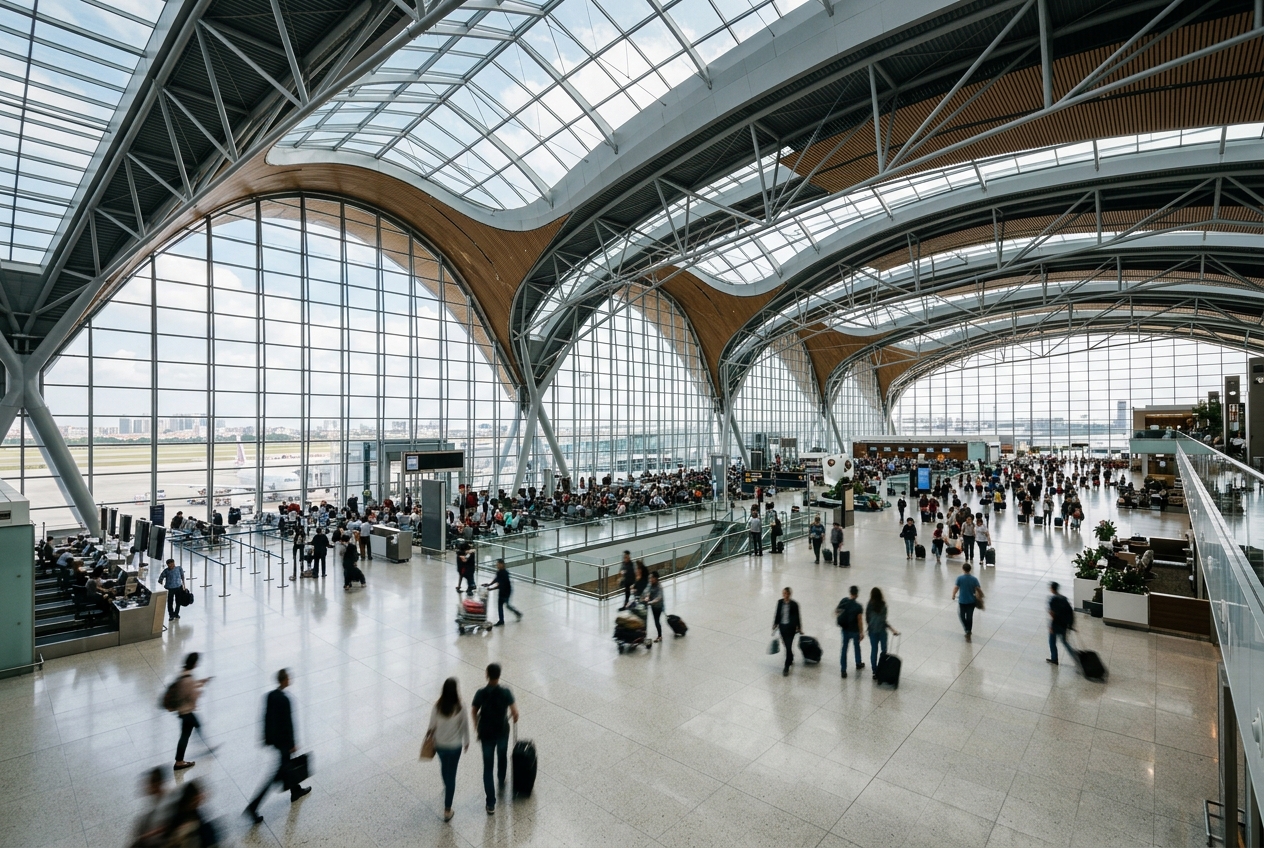
Gateway to Algeria's vast Saharan highlands region.
Location
Laghouat, Algeria
Laghouat - Molay Ahmed Medeghri Airport (IATA: LOO, ICAO: DAUL) is a regional airport serving the city of Laghouat, the capital of Laghouat Province in northern Algeria. Situated on the edge of the Sahara Desert, the airport connects this mid-sized city to Algeria's main commercial hubs.
The airport is named in honor of Molay Ahmed Medeghri, a prominent Algerian political figure. It primarily handles domestic traffic, with Air Algérie operating scheduled services linking Laghouat to Algiers and other Algerian cities. The facility serves both civilian passengers and supports regional connectivity in central Algeria.
Terminals
The airport operates a single terminal building handling both arrivals and departures for domestic passengers.
Getting to & from
Ground transport between the airport and central Laghouat is primarily served by taxis and private vehicles.
Airlines here
Air Algérie is the primary airline operating at Laghouat Airport, offering domestic routes mainly to Algiers.
Notable facts
- ›The airport is named after Molay Ahmed Medeghri, an Algerian minister who died in 1974.
- ›Laghouat is located approximately 400 km south of Algiers on the edge of the Saharan Atlas.
- ›The airport primarily serves domestic routes within Algeria.
- ›Laghouat Province is known for its oil and gas industry, which contributes to airport traffic.
- ›The ICAO code DAUL places it within Algeria's managed airspace under the DA prefix.
This profile is provided for general information only. Details may be inaccurate or outdated — always verify with the airport's official website before acting on them.
