Translate


Gateway to West Siberia's oil-rich Khanty-Mansiysk region.
Opened
1964
Location
Nizhnevartovsk, Russia
Nizhnevartovsk Airport (IATA: NJC, ICAO: USNN) serves the city of Nizhnevartovsk in the Khanty-Mansiysk Autonomous Okrug of western Siberia, Russia. The airport plays a critical role in connecting this major oil-production hub to Moscow and other Russian cities, supporting both commercial passengers and the petroleum industry workforce.
The airport handles a significant volume of charter and scheduled flights, largely driven by the oil and gas sector that dominates the regional economy. It operates year-round despite the harsh Siberian climate, which can see temperatures drop well below freezing in winter.
Nizhnevartovsk Airport is managed under Russian federal aviation regulations and has undergone modernization efforts to improve passenger facilities and runway capacity in line with growing regional demand.
Terminals
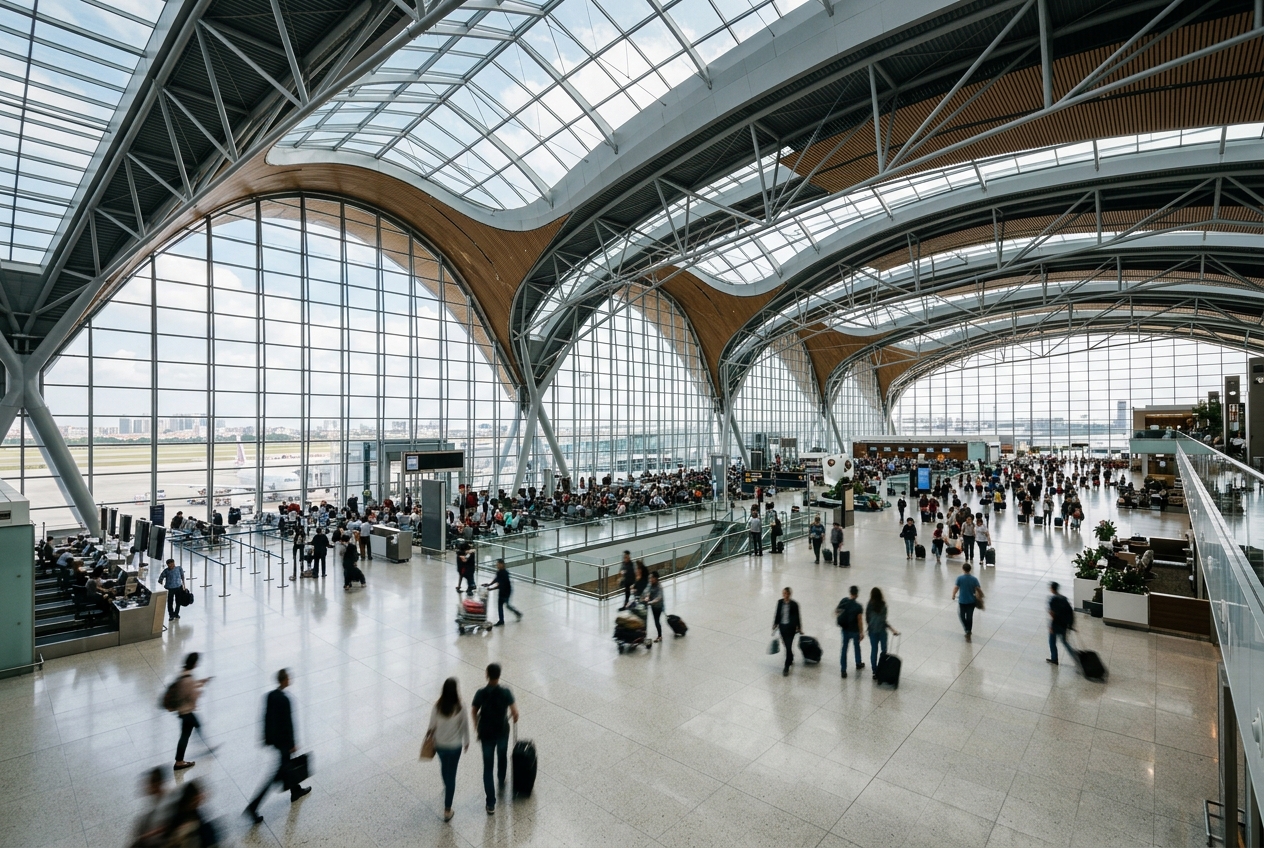
The airport operates a single passenger terminal designed to handle domestic and limited international traffic.
Getting to & from
The airport is located approximately 6 kilometers from the city center and is accessible by taxi and bus services.
Airlines here
S7 Airlines and Utair Aviation are among the primary carriers serving Nizhnevartovsk, with routes connecting primarily to Moscow and other major Russian cities.
Notable facts
- ›Nizhnevartovsk is one of Russia's key oil-producing cities, and the airport serves a large industrial workforce.
- ›The airport handles significant charter traffic related to the oil and gas industry in the Khanty-Mansiysk region.
- ›Extreme winter temperatures regularly affect ground operations, requiring specialized cold-weather procedures.
- ›The airport has a single runway capable of handling medium-haul jet aircraft.
- ›Most scheduled services are domestic, with Moscow (Domodedovo and Sheremetyevo) being the primary destination.
This profile is provided for general information only. Details may be inaccurate or outdated — always verify with the airport's official website before acting on them.