

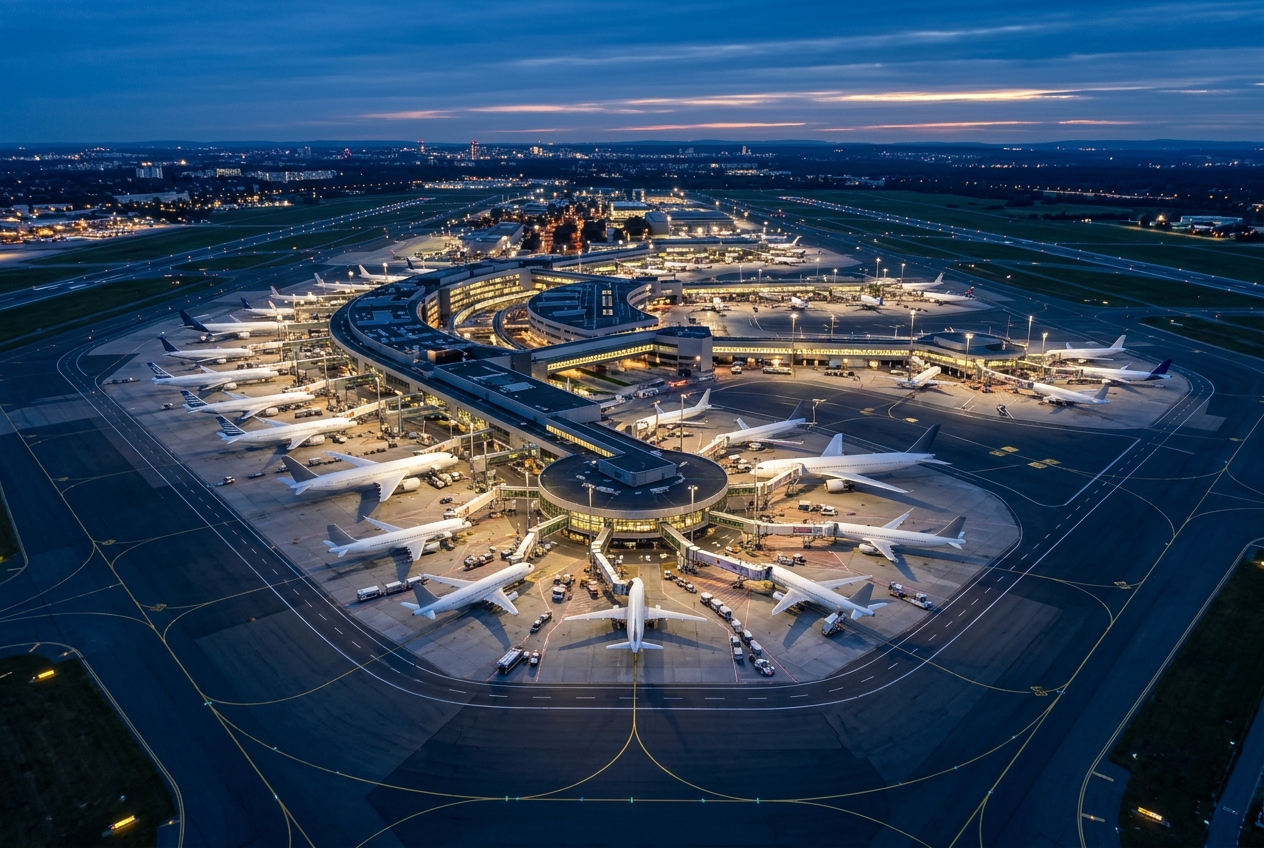
Kazakhstan's premier international gateway in the capital Astana.
Opened
1931
Location
Astana, Kazakhstan
Nursultan Nazarbayev International Airport, coded NQZ/UACC, serves Astana, the capital city of Kazakhstan. The airport is the second busiest in the country after Almaty International Airport and functions as a key hub for both domestic and international travel across Central Asia.
The airport was significantly expanded and modernized ahead of the EXPO 2017 international exhibition held in Astana. A new terminal was constructed for that occasion, increasing capacity and improving passenger facilities. The airport was renamed in honor of Kazakhstan's first president, Nursultan Nazarbayev, in 2019.
Astana, previously known as Nur-Sultan and before that Astana, has seen rapid urban development, and the airport has grown alongside the city's expansion as a political and economic center of Kazakhstan.
Terminals
The airport operates a main terminal complex including a newer terminal (Terminal 2) opened for EXPO 2017, handling both international and domestic passengers.
Getting to & from
The airport is connected to central Astana via bus services, taxis, and ride-hailing apps, with the city center located approximately 15–17 kilometers away.
Airlines here
Air Astana serves as the primary hub carrier, with additional services from SCAT Airlines, FlyArystan, Turkish Airlines, and various other international carriers.
Notable facts
- ›Renamed Nursultan Nazarbayev International Airport in 2019 to honor Kazakhstan's founding president.
- ›A new terminal was built to handle increased passenger traffic for EXPO 2017 hosted in Astana.
- ›The airport is the primary hub for Air Astana, Kazakhstan's flag carrier.
- ›The city served by the airport has gone through several name changes: Akmola, Astana, Nur-Sultan, and back to Astana in 2022.
- ›Located in one of the world's coldest capital cities, the airport operates year-round despite harsh winter conditions.
This profile is provided for general information only. Details may be inaccurate or outdated — always verify with the airport's official website before acting on them.
