

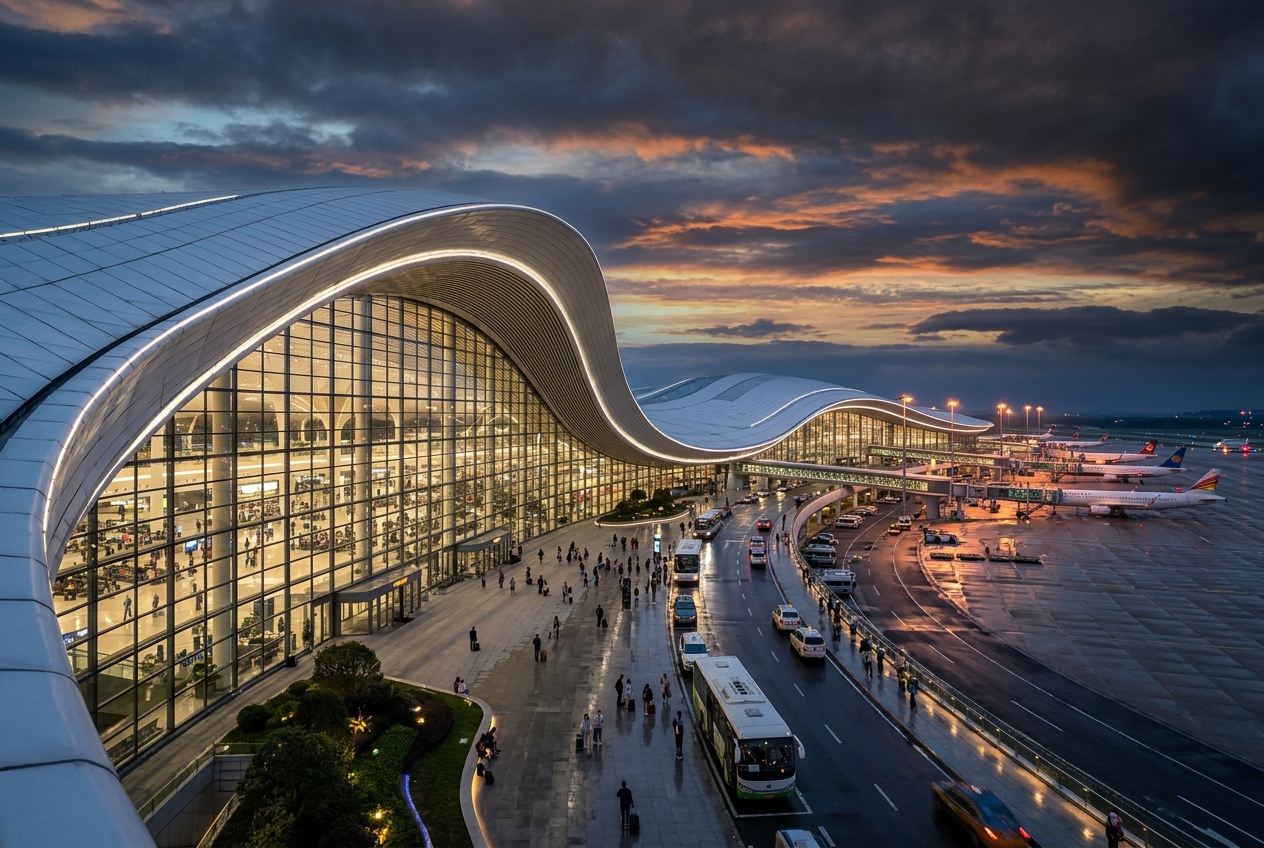
A former Azerbaijani airport closed amid regional conflict.
Location
Khojaly, Azerbaijan
Khojaly Airport was a small civil airport located near the town of Khojaly in the Nagorno-Karabakh region of Azerbaijan. It operated with limited regional connectivity during the Soviet era and the early years of Azerbaijani independence.
The airport ceased operations as a result of the First Nagorno-Karabakh War in the early 1990s, when Armenian forces took control of the region. The facility remained non-operational for decades under Armenian control until Azerbaijan recaptured the area during the 2020 Nagorno-Karabakh War.
As of the available data, the airport has not been restored to operational civilian use following Azerbaijan's reassertion of control over the region. Its future status remains uncertain amid broader regional reconstruction efforts.
Notable facts
- ›Assigned the ICAO code UBBS but has no active IATA code.
- ›Located in the Nagorno-Karabakh region, an area of long-standing territorial dispute between Azerbaijan and Armenia.
- ›The airport became non-operational following the First Nagorno-Karabakh War in the early 1990s.
- ›Azerbaijan recaptured the Khojaly area during the 44-day war in autumn 2020.
- ›The town of Khojaly is also known for the 1992 massacre that occurred during the First Nagorno-Karabakh War.
This profile is provided for general information only. Details may be inaccurate or outdated — always verify with the airport's official website before acting on them.
