Translate


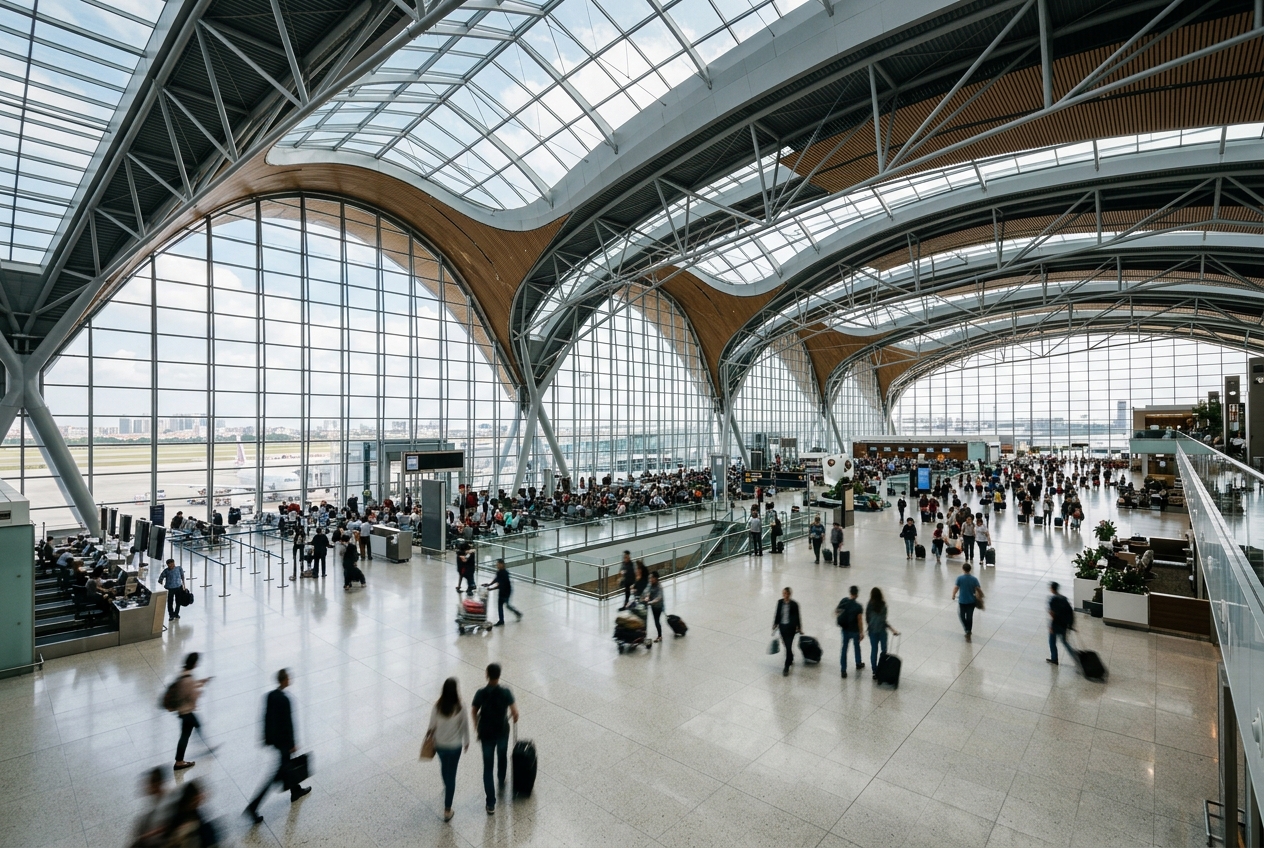
Nigeria's federal capital gateway serving Abuja.
Opened
1982
Location
Abuja, Nigeria
Nnamdi Azikiwe International Airport (IATA: ABV, ICAO: DNAA) is the primary international airport serving Abuja, the federal capital of Nigeria. It is named after Nnamdi Azikiwe, the first President of Nigeria. The airport is operated by the Federal Airports Authority of Nigeria (FAAN) and serves as one of the country's busiest aviation hubs.
The airport handles a significant volume of both domestic and international traffic, connecting Abuja to destinations across Africa, Europe, and the Middle East. It underwent major renovations and infrastructure upgrades in the early 2000s to expand capacity and modernize facilities.
The airport plays a strategic role in Nigeria's aviation sector, serving government officials, diplomats, and the large business community based in the capital city.
Terminals
The airport has a domestic terminal and an international terminal handling separate passenger flows.
Getting to & from
Ground transport options include taxis, ride-hailing services such as Uber, and private car hire connecting the airport to central Abuja, approximately 45 kilometres away.
Airlines here
Major airlines operating here include Air Peace, Ethiopian Airlines, Qatar Airways, Turkish Airlines, British Airways, and Lufthansa.
Notable facts
- ›Named after Nnamdi Azikiwe, Nigeria's first President and a founding father of the nation.
- ›Operated by the Federal Airports Authority of Nigeria (FAAN).
- ›The airport is located in the Gwagwalada area, southwest of central Abuja.
- ›It serves as a key gateway for diplomatic travel given Abuja's status as Nigeria's federal capital.
- ›A major runway rehabilitation project was carried out in 2017, temporarily diverting flights to other airports.
This profile is provided for general information only. Details may be inaccurate or outdated — always verify with the airport's official website before acting on them.