

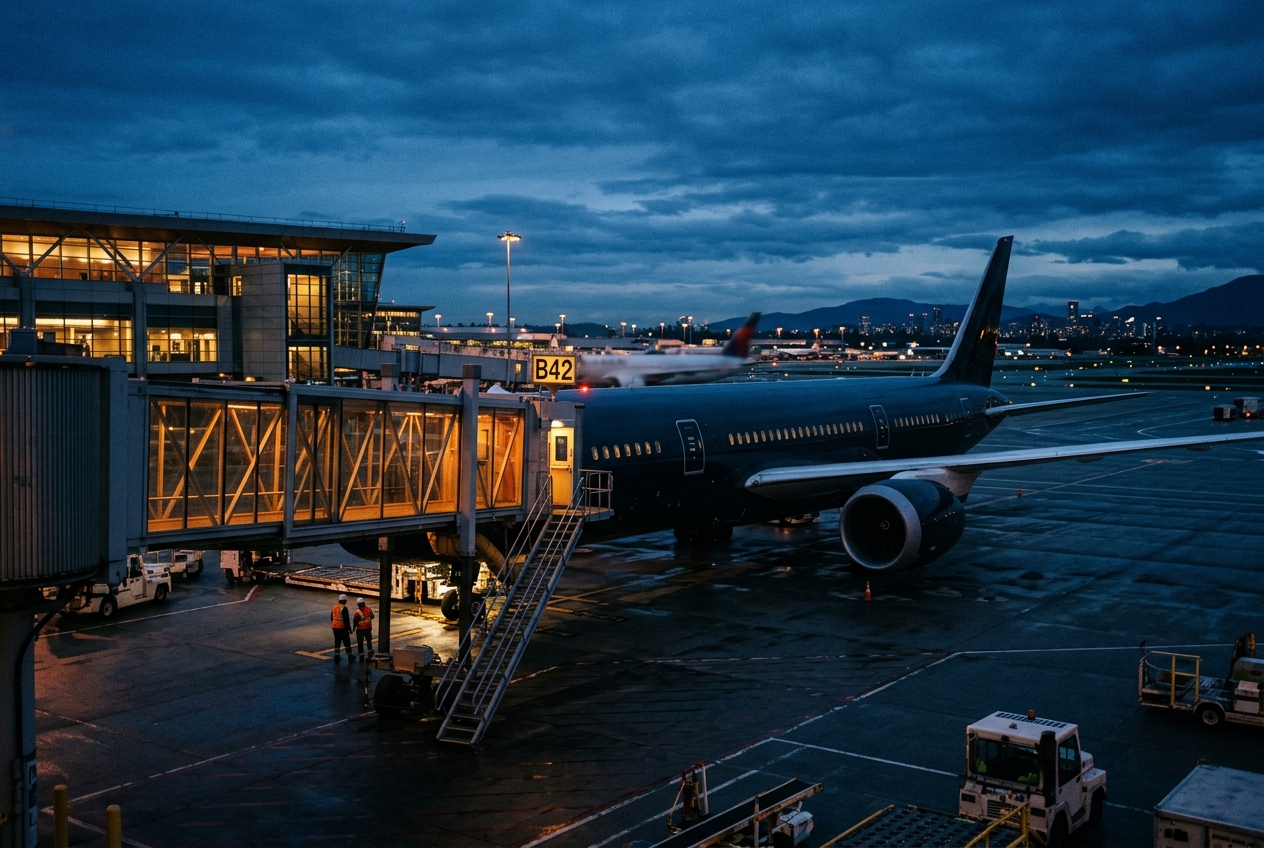
Small regional airstrip serving N'zambi in the Republic of the Congo.
Location
N'zambi, Republic of the Congo
N'komo Airport, designated with ICAO code FCPK, is a small airfield located near N'zambi in the Republic of the Congo. It serves the local community and surrounding region, primarily supporting light aviation and limited scheduled or charter operations typical of rural Congolese airstrips.
Detailed operational and infrastructure information about this airport is scarce in publicly available sources. Like many remote airfields in Central Africa, it likely serves as a critical access point for communities with limited road connectivity, supporting humanitarian, medical, and light commercial transport needs.
Notable facts
- ›Designated ICAO code is FCPK.
- ›Located near N'zambi in the Republic of the Congo.
- ›No IATA code has been assigned to this airport.
- ›Serves a remote area of the Republic of the Congo with limited alternative transport infrastructure.
This profile is provided for general information only. Details may be inaccurate or outdated — always verify with the airport's official website before acting on them.