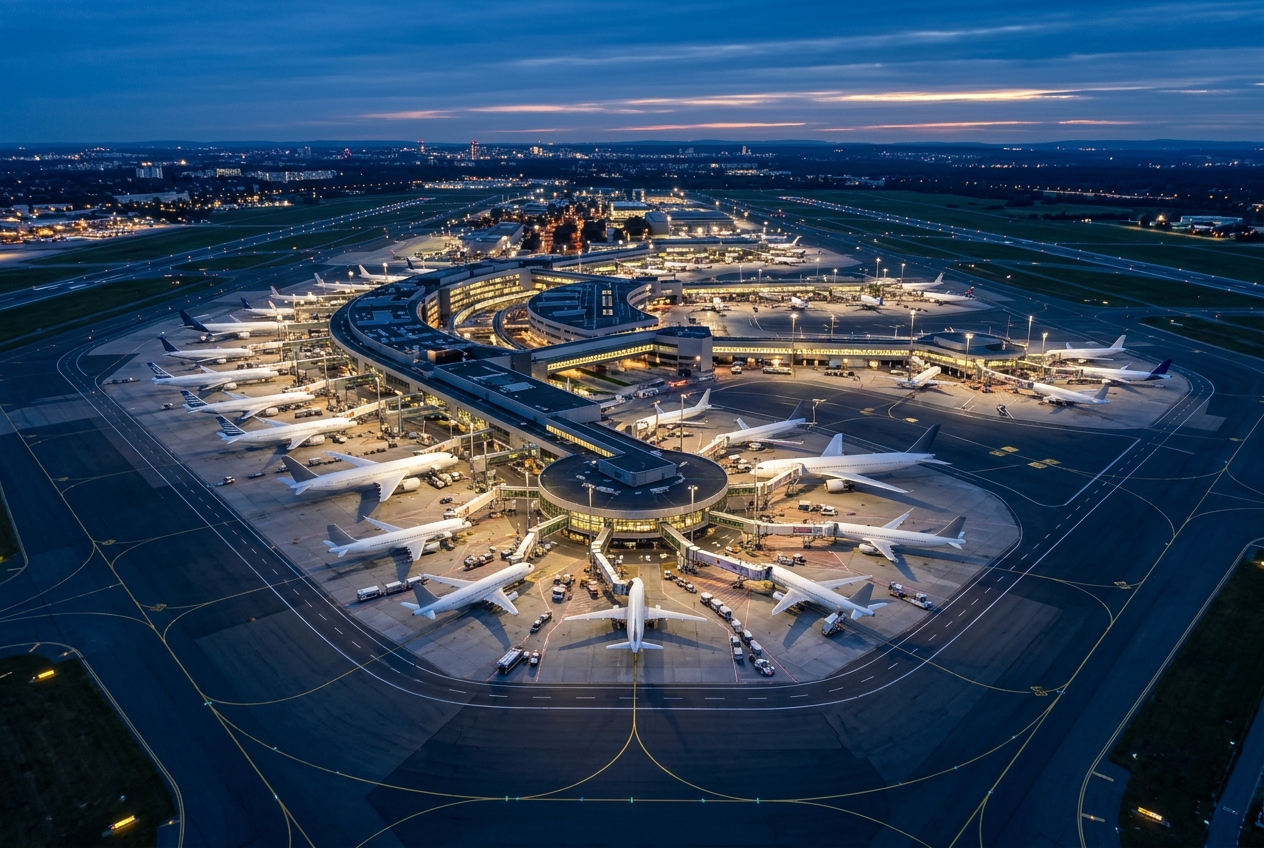
Gateway to Pakistan's remote Gilgit-Baltistan mountain region.
Location
Gilgit, Pakistan
Gilgit Airport (IATA: GIL, ICAO: OPGT) is a domestic airport serving the city of Gilgit, the capital of Gilgit-Baltistan province in northern Pakistan. Situated at an elevation of approximately 1,524 metres (5,000 feet) above sea level, the airport is surrounded by the Karakoram and Hindu Kush mountain ranges, making it one of the most challenging airports to operate in the world.
The airport primarily handles flights connecting Gilgit to Islamabad and other Pakistani cities, serving as a critical lifeline for a region where road travel can be hazardous and time-consuming. Flights are heavily dependent on weather conditions, and cancellations or delays are common due to mountain weather patterns, limited visibility, and strong winds. Pakistan International Airlines (PIA) is the primary carrier serving this route.
Gilgit Airport plays a vital role in supporting tourism to the region, which is home to some of the world's highest peaks including K2, Nanga Parbat, and Rakaposhi. It also supports government, military, and humanitarian operations in the remote Gilgit-Baltistan territory.
Terminals
The airport has a modest single terminal with basic passenger facilities appropriate for its domestic traffic volumes.
Getting to & from
Ground transport from the airport to Gilgit city centre is available via taxis and private vehicles, with the airport located close to the city.
Airlines here
Pakistan International Airlines (PIA) is the primary airline operating at Gilgit Airport, with scheduled services mainly to Islamabad.
Notable facts
- ›Situated at approximately 1,524 metres (5,000 feet) elevation amid towering mountain ranges.
- ›Flights are subject to frequent weather-related cancellations and delays due to mountainous terrain.
- ›Serves as a critical transport link for the remote Gilgit-Baltistan region.
- ›The surrounding peaks include some of the world's highest mountains, including Nanga Parbat.
- ›Visual flight rules (VFR) conditions are typically required for safe operations at this airport.
This profile is provided for general information only. Details may be inaccurate or outdated — always verify with the airport's official website before acting on them.