Inner Mongolia's main gateway connecting China and beyond.
Opened
1958
Location
Hohhot, China
Hohhot Baita International Airport (IATA: HET, ICAO: ZBHH) is the primary commercial airport serving Hohhot, the capital city of Inner Mongolia Autonomous Region in northern China. It functions as the busiest airport in Inner Mongolia and handles millions of passengers annually, connecting the region to major Chinese cities and select international destinations.
The airport is named after the Baita (White Tower) district where it is located, roughly 15 kilometers east of central Hohhot. It has undergone significant expansion in recent decades to accommodate growing passenger traffic driven by economic development and tourism in the region.
Hohhot Baita International Airport serves as an important hub for Air China and other domestic carriers, offering routes across mainland China as well as limited international services to destinations in Asia.
Terminals
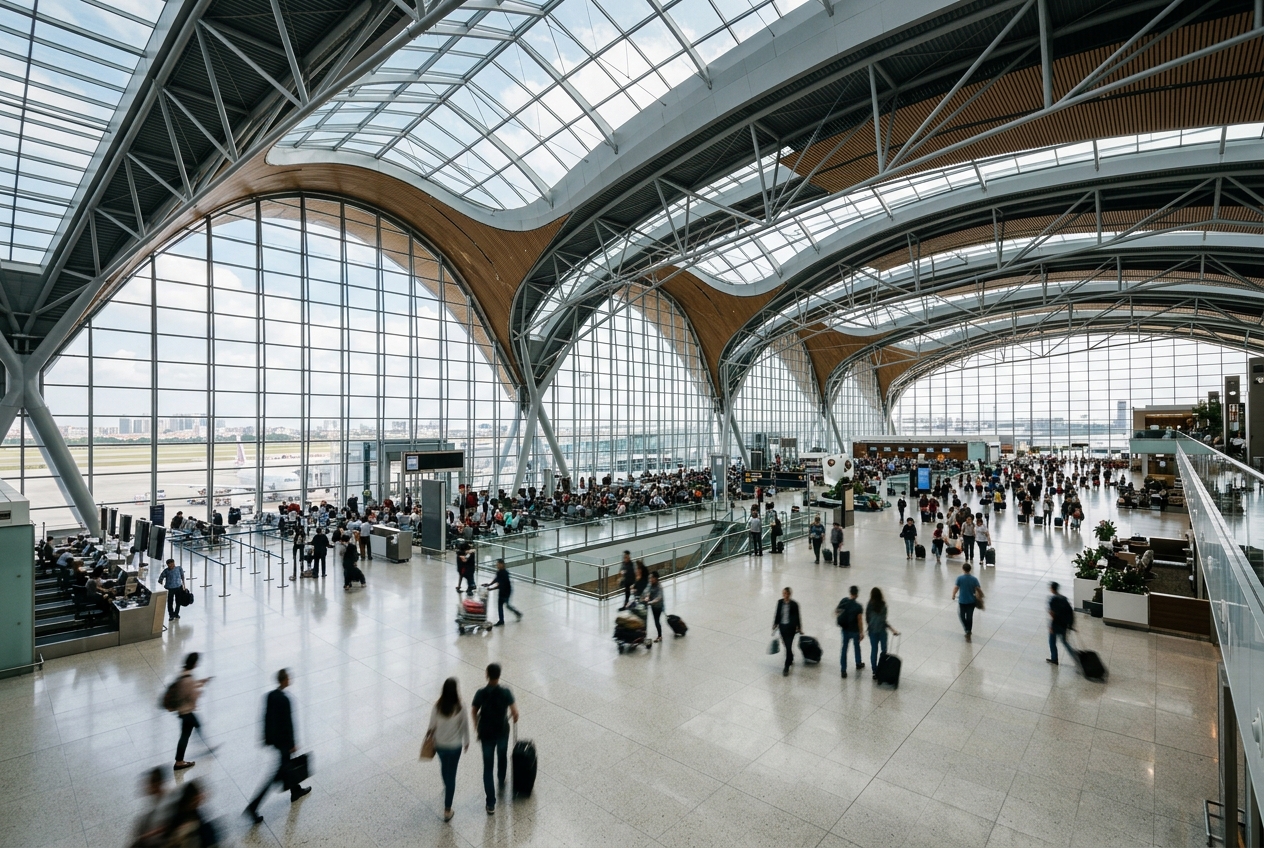
The airport operates with a main terminal building that has been expanded over time to handle increasing passenger volumes.
Getting to & from
The airport is connected to central Hohhot via public bus routes and taxi services, with the city center approximately 15 kilometers away.
Airlines here
Air China uses the airport as a key regional hub, while China Eastern, China Southern, and several low-cost carriers also operate services here.
Notable facts
- ›Busiest airport in Inner Mongolia Autonomous Region.
- ›Located approximately 15 km east of central Hohhot.
- ›Named after the Baita (White Tower) area where it is situated.
- ›Handles both domestic Chinese routes and limited international flights to Asia.
- ›Serves as a key aviation hub supporting Inner Mongolia's tourism and economic growth.
This profile is provided for general information only. Details may be inaccurate or outdated — always verify with the airport's official website before acting on them.