Translate


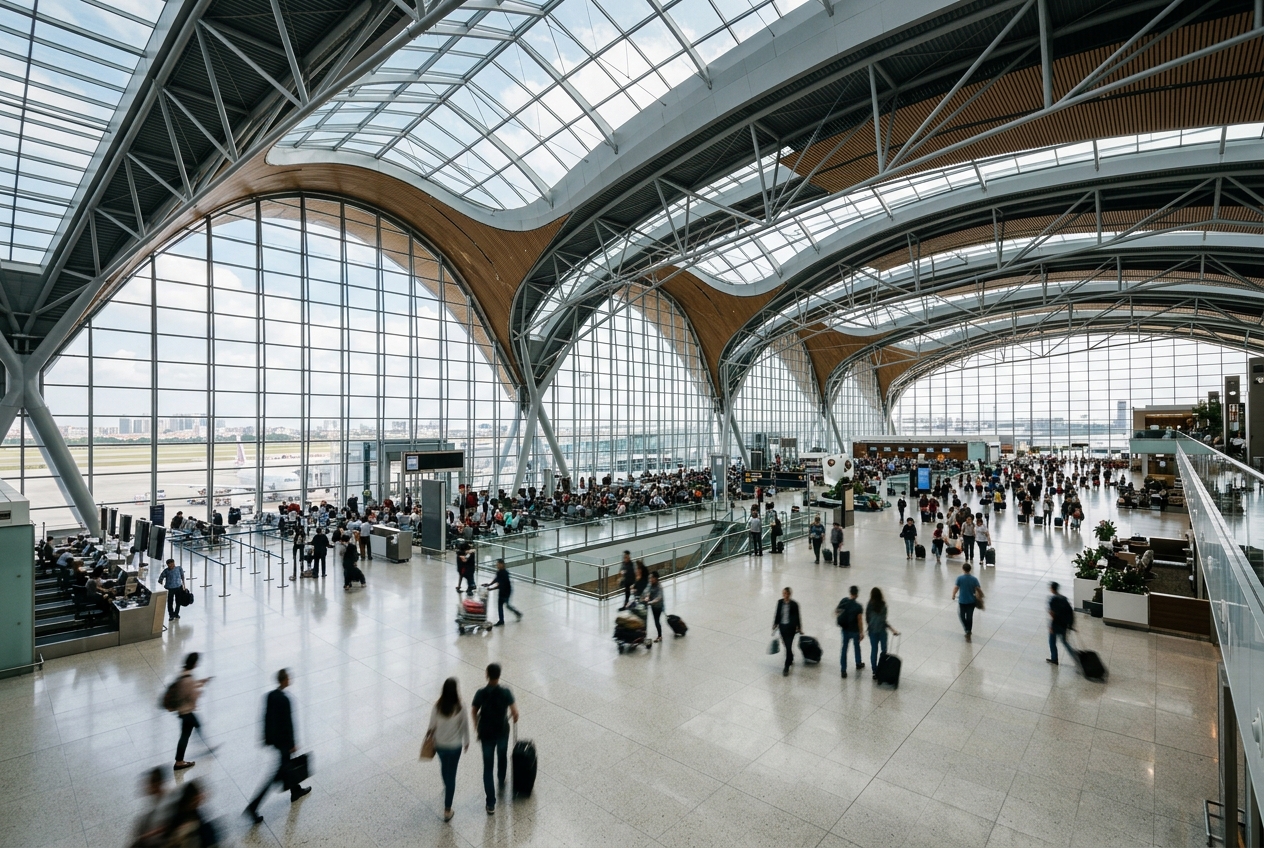
Salvador's international gateway serving northeast Brazil.
Opened
1952
Location
Salvador, Brazil
Deputado Luiz Eduardo Magalhães International Airport, known by its IATA code SSA, is the primary airport serving Salvador, the capital of Bahia state in northeastern Brazil. It is one of the busiest airports in Brazil and serves as a key hub for domestic and international travel in the region.
The airport is named after Luiz Eduardo Magalhães, a prominent Brazilian politician and former Speaker of the Chamber of Deputies who represented Bahia. It handles millions of passengers annually, connecting Salvador to major Brazilian cities as well as international destinations in Europe and the Americas.
The airport underwent significant expansions and modernizations ahead of the 2014 FIFA World Cup, for which Salvador was one of the host cities. These upgrades improved passenger capacity and overall infrastructure.
Terminals
The airport operates with a single integrated terminal building that was expanded and renovated to increase passenger capacity.
Getting to & from
The airport is connected to Salvador's city center by road via taxi, ride-hailing services, and bus, with the journey typically taking around 30 to 45 minutes depending on traffic.
Airlines here
Major airlines operating here include LATAM Brasil, Gol Linhas Aéreas, and Azul Brazilian Airlines, along with select international carriers serving transatlantic routes.
Notable facts
- ›Named after Luiz Eduardo Magalhães, a Bahian politician and former Speaker of Brazil's Chamber of Deputies.
- ›Served as one of the host airports for the 2014 FIFA World Cup held in Brazil.
- ›Located approximately 28 kilometers from Salvador's historic city center.
- ›Handles both domestic and international flights, including routes to Europe and South America.
- ›One of the busiest airports in northeastern Brazil by passenger volume.
This profile is provided for general information only. Details may be inaccurate or outdated — always verify with the airport's official website before acting on them.