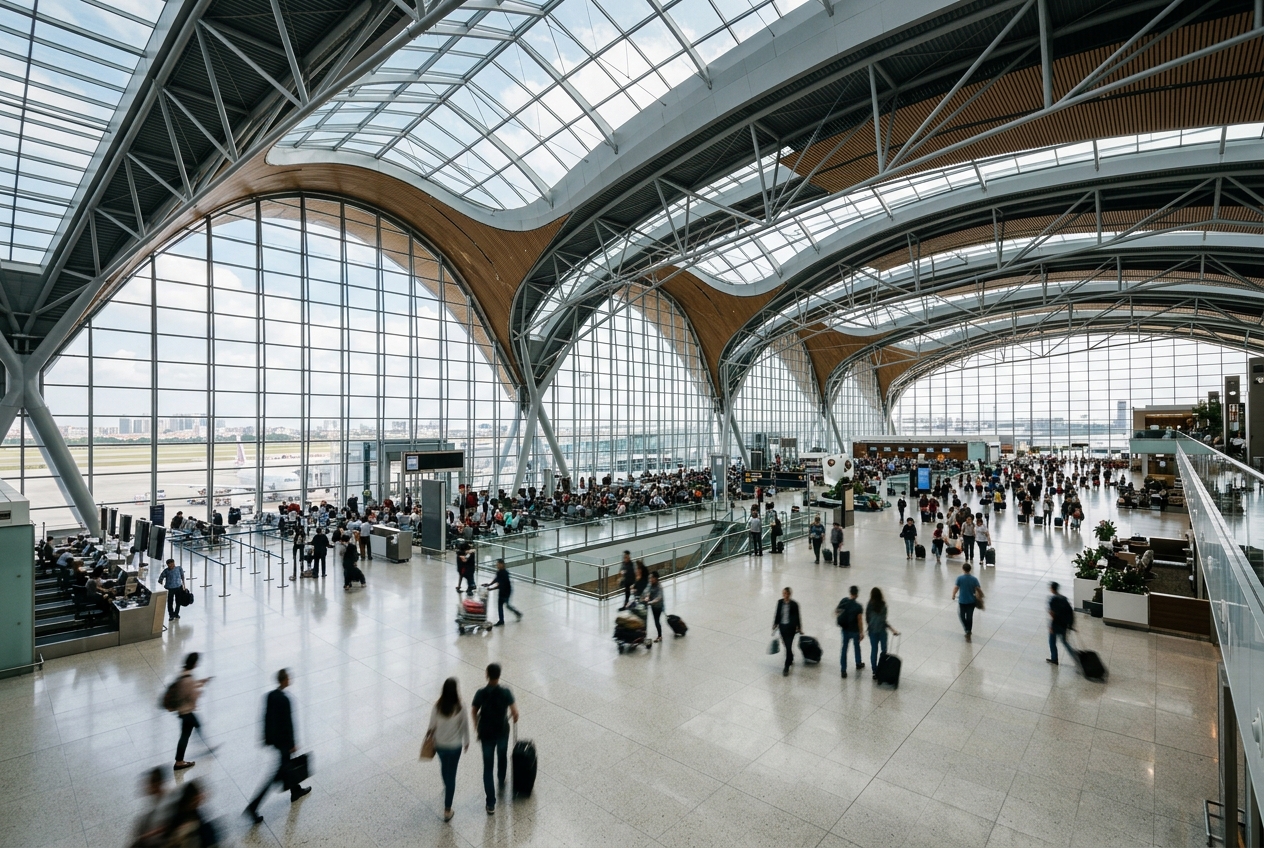
Gateway to Balochistan, serving Pakistan's southwestern highlands.
Location
Quetta, Pakistan
Quetta International Airport (IATA: UET, ICAO: OPQT) is the principal commercial airport serving Quetta, the capital of Balochistan province in southwestern Pakistan. Situated at an elevation of approximately 1,609 meters (5,280 feet) above sea level, it is one of the higher-altitude airports in the country.
The airport is operated by the Pakistan Civil Aviation Authority (PCAA) and handles both domestic and limited international traffic. It serves as an important air link for a region that is otherwise relatively isolated due to mountainous terrain and limited road infrastructure.
Quetta International Airport has undergone various upgrades over the years to improve its capacity and facilities, though it remains a mid-sized facility compared to major Pakistani hubs such as Karachi and Lahore.
Terminals
The airport operates a single passenger terminal handling both domestic and international flights.
Getting to & from
Ground transport into Quetta city is primarily served by taxis and private vehicles, as no formal rail or bus rapid transit link exists.
Airlines here
Pakistan International Airlines (PIA) is the primary carrier operating at Quetta, with additional services provided by Air Arabia and other regional operators.
Notable facts
- ›Located at an elevation of approximately 1,609 meters (5,280 feet) above sea level.
- ›Serves as the main aviation gateway to Balochistan, Pakistan's largest province by area.
- ›Operated by the Pakistan Civil Aviation Authority (PCAA).
- ›The airport has military significance due to its proximity to the Afghanistan border region.
- ›High altitude and surrounding terrain require specific operational considerations for aircraft performance.
This profile is provided for general information only. Details may be inaccurate or outdated — always verify with the airport's official website before acting on them.