
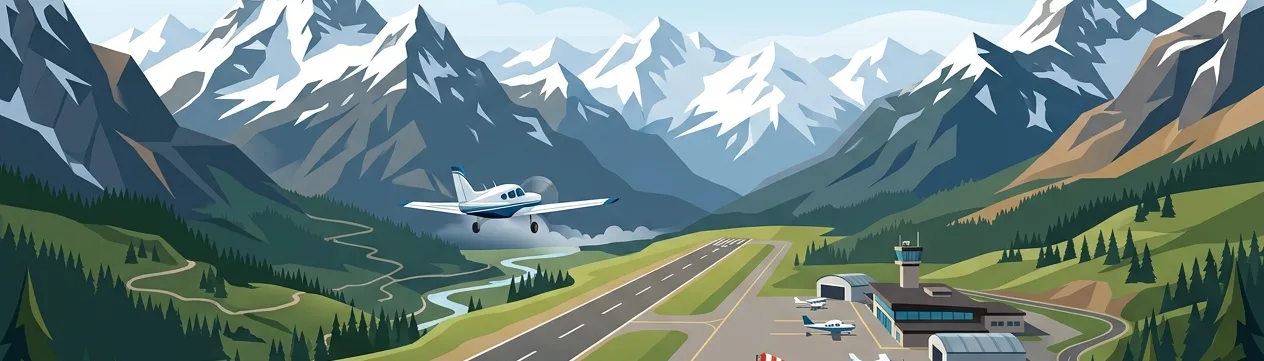
Remote Yukon gateway serving Burwash Landing and Kluane country.
Location
Burwash Landing, Canada
Burwash Airport (IATA: YDB, ICAO: CYDB) is a small regional airport located in Burwash Landing, Yukon, Canada. It serves the local community and provides air access to the remote Kluane Lake region, which is adjacent to Kluane National Park and Reserve.
The airport operates as a basic general aviation and charter facility, supporting bush flying operations typical of remote Yukon communities. It plays an important role in connecting an area that has very limited road access alternatives beyond the Alaska Highway.
Terminals
The airport has no formal passenger terminal; facilities are minimal and typical of remote northern bush airports.
Getting to & from
Ground access is via the Alaska Highway, which passes near Burwash Landing and connects it to Whitehorse and other Yukon communities.
Airlines here
No scheduled commercial airline service operates regularly from Burwash Airport; the facility primarily supports charter and general aviation flights.
Notable facts
- ›Located near Kluane National Park and Reserve, a UNESCO World Heritage Site.
- ›Burwash Landing is one of the smallest communities in Yukon, with a population of only a few hundred.
- ›The airport serves as an important lifeline for a community with limited overland transportation options.
- ›Elevation is approximately 2,647 feet (807 metres) above sea level.
- ›The airport is owned and operated by the Government of Yukon.
This profile is provided for general information only. Details may be inaccurate or outdated — always verify with the airport's official website before acting on them.
