Overview
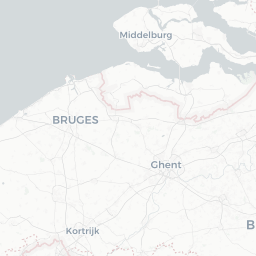
Ghent (Gent in Dutch) is the capital of the East Flanders province and, with around 265,000 residents, one of Belgium's largest cities. It sits at the confluence of the Leie and Scheldt rivers, a geography that shaped its rise as a medieval cloth-trading powerhouse and left behind a dense skyline of guild houses, belfries, and Romanesque towers that rivals anything in Bruges — without quite the same tourist crowds.
The city is also a major university town, home to Ghent University (founded 1817), which keeps the streets, cafés, and cycling lanes lively year-round. That student energy blends with a genuine pride in local heritage: Ghent hosts one of the longest city festivals in Europe each July, and its culinary scene ranges from Michelin-starred restaurants to hole-in-the-wall friteries.
Ghent is compact enough to explore largely on foot or by bicycle, yet large enough to sustain several days of discovery. The historic centre — the Patershol neighbourhood, Graslei and Korenlei quays, and the area around Sint-Baafskathedraal — is walkable and well signposted. Beyond the postcard scenery, the city has a reputation for progressive urban policy, including a long-running weekly Meat-free Thursday initiative.
Before You Go
Visas
Belgium is a Schengen Area member. Visa requirements vary significantly by nationality. Check TravelerPulse's Visas section and consult the official Belgian immigration authority (Dienst Vreemdelingenzaken / Office des Étrangers) before you travel.
Health
No destination-specific vaccinations are required for most travelers. Belgium has a well-developed public healthcare system. Visitors from EU/EEA countries should carry their European Health Insurance Card (EHIC). Non-EU visitors should arrange comprehensive travel insurance that covers medical evacuation.
What to pack
- Belgium's weather is changeable year-round; a waterproof layer is advisable in any season
- Comfortable walking shoes — the historic centre has extensive cobblestones
- A cycling helmet if you plan to rent a bike (not legally required but recommended)
- Plug adapters for Type E sockets (standard across Belgium)
Getting There
By Air
Ghent does not have its own commercial airport. The most convenient options are Brussels Airport (BRU) in Zaventem and Brussels South Charleroi Airport (CRL). From Brussels Airport, direct trains run to Ghent-Sint-Pieters station; verify current schedules and journey times on the NMBS/SNCB website (belgiantrain.be). From Charleroi, a bus transfer to Brussels-Midi is required before catching a train to Ghent. Bruges or Antwerp airports are not commercial passenger hubs; disregard them for this purpose.
By Train
Ghent-Sint-Pieters is the main intercity station and is well connected to Brussels (frequent services, roughly 30–35 minutes on intercity trains — verify current timetables), Bruges, Antwerp, and Kortrijk. International Thalys and Eurostar services operate via Brussels-Midi, requiring an onward train to Ghent. Check Eurostar.com and belgiantrain.be for through-booking options.
By Car
Ghent sits near the intersection of the E17 and E40 motorways. Note that the historic city centre operates a Low Emission Zone (LEZ) and a Circulation Plan that restricts through-traffic significantly. Familiarise yourself with the zone boundaries before driving in; fines are issued automatically by camera. Park-and-ride facilities exist on the city's outskirts — verify current locations and rates at visitgent.be or the city's mobility pages.
By Bus
Flixbus and other coach operators connect Ghent to several European cities. Coaches typically stop near Ghent-Sint-Pieters station or at designated stops; verify with your operator.
Getting Around
On Foot
The historic core is compact and best explored on foot. Most major sights — Gravensteen castle, Graslei/Korenlei, Sint-Baafskathedraal, the Belfry, and Patershol — are within comfortable walking distance of one another.
By Bicycle
Ghent has an extensive cycling network and is considered one of Belgium's most bike-friendly cities. Blue Bike (blue-bike.be) operates at Ghent-Sint-Pieters station for registered users; several private rental operators also exist in the city centre. The Circulation Plan actively prioritises cyclists over cars in many zones.
By Tram and Bus
De Lijn operates the local tram and bus network. Tickets can be purchased via the De Lijn app or at machines; buying on board is typically more expensive. Trams connect the station with the city centre quickly. Verify current route maps and fares at delijn.be.
By Water Bus
Ghent operates a seasonal water bus (Bootje varen) on its canals, providing a scenic link between key points. Availability is seasonal — confirm dates and stops locally or via visitgent.be before planning around it.
Things to See & Do
Landmarks and Museums
- Sint-Baafskathedraal (St Bavo's Cathedral): Home to the Ghent Altarpiece (The Adoration of the Mystic Lamb) by Hubert and Jan van Eyck, completed in 1432 and considered one of the most significant paintings in Western art. The altarpiece now has a dedicated viewing room within the cathedral; an admission fee applies — verify current pricing at sintbaafskathedraal.be.
- Gravensteen (Castle of the Counts): A 12th-century water castle in the city centre. Admission fees apply; verify at gravensteen.stad.gent.
- Belfry of Ghent (Belfort): A UNESCO World Heritage Site (listed alongside the Belfries of Belgium and France). A lift takes visitors most of the way to the top for panoramic views. Verify opening times and fees locally.
- STAM – Ghent City Museum: Housed in a former abbey complex, it traces the city's history from prehistoric times to the present.
- MSK – Museum of Fine Arts (Museum voor Schone Kunsten): The city's principal fine-art museum, with a collection spanning the 14th century to the early 20th, including works by Hieronymus Bosch. Verify current hours and admission at mskgent.be.
- S.M.A.K. – Stedelijk Museum voor Actuele Kunst: Ghent's contemporary art museum, located adjacent to the MSK. Verify at smak.be.
- Design Museum Gent: Chronicles applied arts and design; closed for renovation as of this writing — confirm current status before visiting.
Neighbourhoods and Outdoor Spaces
- Graslei and Korenlei: The twin medieval quays along the Leie are Ghent's most photographed streetscapes. Most attractive at dusk when the guild houses are lit.
- Patershol: A tightly woven neighbourhood of narrow lanes and 17th-century houses northwest of Gravensteen, now concentrated with restaurants.
- Citadelpark: The city's largest park, adjacent to the MSK and S.M.A.K., pleasant for an afternoon walk.
- Vrijdagmarkt: A large historic square with a statue of Jacob van Artevelde; a traditional market takes place here on Fridays and Saturdays (verify current market days locally).
Events
- Ghent Festivities (Gentse Feesten): Ten days of free outdoor music, street theatre, and cultural events each July — one of the largest city festivals in Europe.
- Film Fest Gent: An international film festival held annually in October.
Food & Drink
Local Specialties
Ghent has a strong culinary identity rooted in Flemish tradition with some distinctive local items:
- Waterzooi: A cream-based stew, historically made with fish from the Leie river but now more commonly prepared with chicken (kippenwaterzooi). Considered the city's signature dish.
- Neuzekes / Cuberdons: Cone-shaped, raspberry-flavoured jellied sweets with a hard shell and soft centre. Street vendors sell them near the Vrijdagmarkt and Graslei. Authenticity and freshness vary by vendor.
- Gentse mokken: A traditional Ghent gingerbread biscuit.
- Tierenteyn mustard: A coarse-ground mustard made to a recipe unchanged since 1790, sold from a single shop on Groentenmarkt — a genuine local institution worth a visit even if you don't buy.
Where to Eat and Drink
Ghent's restaurant density is high relative to its size, ranging from Flemish bistros (eetcafés) to internationally recognised fine dining. The Patershol neighbourhood is particularly concentrated with independent restaurants. The city's large student population supports a lively café and bar culture; Vrijdagmarkt and Vlasmarkt squares are traditional gathering points for evening drinks.
Ghent has a notably strong vegetarian and vegan dining scene — an outgrowth of its Meat-free Thursday initiative — with several dedicated restaurants alongside conventional options. Verify current listings and hours through visitgent.be or a current restaurant guide, as the scene changes regularly.
Shopping
Ghent's main commercial shopping street is the Veldstraat and its surrounding pedestrian zone, with high-street chains and department stores. For independent retail, the areas around Vrijdagmarkt, Walpoortstraat, and Serpentstraat have a concentration of independent boutiques, vintage shops, and specialist food stores.
Markets worth knowing:
- A general market operates on Vrijdagmarkt on Fridays and Saturdays (verify current schedule locally).
- A bird and antiques market takes place at Vrijdagmarkt on Sunday mornings (verify locally).
- The Groentenmarkt (Vegetable Market) square hosts weekend markets and is home to the historic Tierenteyn mustard shop.
For Ghent-specific food souvenirs, cuberdons, Gentse mokken, and Tierenteyn mustard are the most practical and locally meaningful options.
Practical Information
Emergency Numbers
- General emergency (police, fire, ambulance): 112 (EU-wide number)
- Police non-emergency: 101
Money
Belgium is a eurozone country. ATMs (bancontact/Maestro/Visa networks) are widely available. Card payment is broadly accepted, though some smaller cafés and market vendors prefer cash — carry a small amount.
Electricity
Type E sockets, 230V/50Hz. Travelers from North America will need both a plug adapter and a voltage converter for non-dual-voltage devices.
Connectivity
Free public Wi-Fi is available in many cafés, hotels, and some public spaces. EU roaming rules apply to SIM cards from EU member states. Non-EU visitors should verify roaming charges with their carrier or consider a local SIM.
Tipping
Tipping is not as customary in Belgium as in North America. Rounding up the bill or leaving a small amount for good service is appreciated but not obligatory. Service charges are sometimes included — check your bill.
Opening Hours
Many smaller shops and some museums are closed on Mondays. Sunday trading hours are often reduced. Always verify current opening hours directly with attractions before visiting, as they change seasonally and without notice.
Safety
Ghent is generally considered a safe city for travelers. Petty theft — pickpocketing and bag snatching — is the most common concern, particularly in crowded tourist areas (Graslei, Vrijdagmarkt) and on public transport. Standard precautions apply: keep valuables out of sight, use inside pockets or a crossbody bag, and be aware of your surroundings in busy spaces.
The city centre's Circulation Plan has significantly reduced car traffic in the historic core, making it safer for pedestrians and cyclists, but cycling in the city still requires attention to tram tracks, which can catch bicycle wheels.
For updated travel advisories specific to Belgium, consult your country's official foreign affairs ministry before departure.
Local Culture & Etiquette
Ghent has a distinct cultural identity within Flanders — simultaneously proud of its medieval heritage and self-consciously progressive in its civic life. The city historically produced two of the most consequential figures in European history: Jan van Eyck, who worked in the city and created the Ghent Altarpiece, and Charles V, Holy Roman Emperor, who was born here in 1500 (the Prinsenhof palace where he was born no longer survives in its original form).
The local dialect, Gents (a form of Flemish Dutch), remains a source of local pride. Visitors will find that Dutch is the primary language of daily life, but English proficiency is high, particularly among younger residents and anyone working in hospitality.
Ghent has a long tradition of civic independence and social activism. The city introduced a weekly Meat-free Thursday (Donderdag Veggiedag) in 2009 — the first city in the world to do so institutionally — and has maintained a reputation for progressive urban and environmental policy. This is reflected in its food scene and in a general civic culture that is relaxed but engaged.
When visiting religious sites — Sint-Baafskathedraal, Sint-Niklaaskerk, and others — dress modestly and be mindful that these are active places of worship, not solely tourist attractions.