Translate
Overview
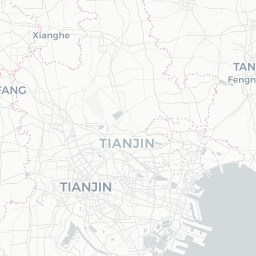
Tianjin is one of China's four direct-controlled municipalities and sits roughly 130 kilometres southeast of Beijing, straddling the Haihe River as it flows toward the Bohai Sea. With a registered population exceeding eleven million, it ranks among China's largest cities, yet it often feels quieter and more navigable than the capital. That contrast is part of its appeal.
The city's most distinctive visual character comes from its treaty-port past. Between the 1860s and the early twentieth century, eight foreign concession zones operated here, each leaving behind coherent blocks of European and Japanese architecture — Italian Renaissance facades beside British Gothic churches beside German art nouveau villas. Walking these neighbourhoods feels less like visiting a theme park and more like reading a layered urban history.
Beyond its historic districts, Tianjin is a working port city with serious industrial and commercial weight. It has also built a growing cultural scene: contemporary art spaces, a lively food culture rooted in Jing-Jin cuisine traditions, and a night economy centred on the Haihe River promenade. Most visitors use it as a complement to a Beijing itinerary, but the city rewards those who stay longer.
Before You Go
Visas
Entry requirements for China depend on your nationality, the purpose of your visit, and your travel route. China has expanded its visa-free and transit visa-free arrangements in recent years, and policies can change. Do not rely on secondhand information. Check TravelerPulse's Visas section for a general starting point, then verify current rules with the official Chinese immigration authority or your nearest Chinese embassy or consulate before booking.
Health and vaccinations
No vaccinations are specifically mandated for entry, but consulting a travel health clinic or your doctor at least six weeks before departure is advisable. Tap water is not considered safe to drink; bottled or filtered water is widely available. Air quality in Tianjin, like many northern Chinese cities, can deteriorate in winter and during pollution episodes — travelers with respiratory conditions should monitor air quality indexes and carry any relevant medication.
Climate
Tianjin has a temperate continental monsoon climate. Summers (June–August) are hot and humid with the majority of annual rainfall; winters (December–February) are cold and dry, with occasional snow. Spring and autumn offer the most comfortable conditions for walking the city's outdoor attractions. Sand and dust from Mongolia can affect air quality in March and April.
Connectivity and apps
China's internet environment blocks many services familiar to Western travelers, including Google, WhatsApp, Instagram, and most international news sites. If you rely on these, set up a VPN before you arrive — downloading and configuring one once inside China is significantly harder. WeChat and Alipay are the dominant payment and communication platforms; setting up at least one before arrival is practical, though foreign card linkage options vary and should be verified in advance.
Getting There
By air
Tianjin Binhai International Airport (IATA: TSN) handles both domestic routes and a growing number of international connections. It is located in the Binhai New Area, roughly 15 kilometres east of the city centre. Verify current routes and flight options directly with airlines or booking platforms, as international service can change.
By high-speed rail from Beijing
The most popular way to reach Tianjin from Beijing is via the Beijing–Tianjin intercity high-speed railway, which connects Beijing South Station to Tianjin Station in approximately 30–40 minutes. Services run frequently throughout the day. Tickets can be purchased at station windows, via the 12306 app (China's official rail booking platform), or through third-party services — check current availability and pricing before travel.
By conventional rail and long-distance bus
Tianjin is well connected by conventional rail to cities across northern and eastern China. Long-distance buses also serve major regional destinations. Tianjin has multiple railway stations; confirm which station serves your route before buying tickets.
By cruise ship
Tianjin's port in Binhai — often marketed as the port for Beijing — receives international cruise ships. Passengers typically transfer to the city centre or to Beijing by road or rail. Verify transfer logistics with your cruise line in advance.
Getting Around
Metro
Tianjin's metro network covers the city reasonably well and continues to expand. It is the most reliable and affordable way to reach major sights and districts. Stations are signposted in both Chinese and English, and announcements are bilingual. Single-journey tickets can be purchased at station machines; transit cards offer convenience if you plan multiple trips.
Taxi and ride-hailing
Taxis are metered and generally honest. Ride-hailing via apps (Didi is the dominant platform) is widely used by locals. Having your destination written in Chinese characters — either printed or on your phone — will help drivers considerably, as English fluency among drivers is limited.
Walking and cycling
The Haihe River district, the Italian Concession (Wudadao area), and the old city core are all walkable once you are in the neighbourhood. Bike-share schemes (operated by Meituan and HelloBike, among others) are available and practical for short inter-neighbourhood trips. Footpaths can be uneven in older districts.
To and from Binhai New Area
The urban rail line connecting central Tianjin to Binhai (and the airport) takes roughly 40–50 minutes. If you are staying in the city centre and visiting the airport or Binhai sights, this line is the simplest option.
Things to See & Do
Haihe River Waterfront
The Haihe River bisects the city and its banks form the spine of Tianjin's public life. An evening stroll along the illuminated promenade — past old bridges, the Eye of Tianjin Ferris wheel, and the mix of colonial-era and contemporary buildings — is one of the city's signature experiences. River cruises operate from several docking points; verify current schedules and departure points locally.
Five Great Avenues (Wudadao)
This neighbourhood in the former British Concession contains one of the most concentrated collections of early twentieth-century European residential architecture in Asia. Hundreds of villas and townhouses survive in varying states of preservation. The area is pleasant on foot or by hired pedicab. A small museum on the street offers historical context; hours and admission should be verified before visiting.
Italian Concession (Yijie)
The former Italian Concession, now sometimes marketed as 'Little Italy,' preserves Baroque and Renaissance-influenced streetscapes around Marco Polo Square. The district has been developed for tourism and dining, which adds some polish to the historical fabric. It is best appreciated in combination with the Wudadao area rather than as a standalone half-day.
Dabei Monastery
Dabei Monastery is one of the best-preserved and most active Buddhist temple complexes in northern China. The site includes several halls spanning different dynasties and remains a genuine place of worship, so visitors should be respectful of the religious atmosphere. Admission and hours should be confirmed locally.
Tianjin Ancient Culture Street (Guwenhua Jie)
This pedestrian street near the old city core is a commercial reconstruction of a Qing Dynasty streetscape, lined with shops selling traditional crafts, clay figurines (Zhang's Clay Figure Art is a Tianjin specialty), New Year prints, and local snacks. It is busy and touristy, but the craft traditions represented are genuinely rooted in local culture.
Porcelain House
An eccentric private museum whose exterior and interiors are encrusted with millions of pieces of antique porcelain, ceramic shards, and crystal. It functions as both an art installation and a display of antiques. Admission applies; verify hours before visiting.
Food & Drink
Tianjin's culinary identity
Tianjin occupies a distinct position in Chinese food culture, sitting at the intersection of northern staple traditions and a port city's openness to outside influence. The city is particularly famous for three snacks collectively called 'Tianjin's Three Delicacies': Goubuli steamed stuffed buns (baozi), Erduoyan fried rice cake, and Guifaxiang sesame-seed-covered fried dough twists (mahua). These are not marketing inventions — they have genuine roots in the city and remain locally popular.
Where to eat
Gu Culture Street and the Binjiang Road area offer high concentrations of local snack vendors and sit-down restaurants. The Goubuli brand has multiple outlets, including its original location — the quality and atmosphere of the original location differs from chain branches, which are widespread. Night markets along the Haihe riverfront also offer street food, particularly on summer evenings.
Broader cuisine
Beyond the famous snacks, Tianjin's restaurant scene covers the full range of Chinese regional cuisines. Seafood from the nearby Bohai Sea — particularly crab in autumn — is a local highlight. Jing-Jin (Beijing-Tianjin) style cuisine emphasises wheat-based dishes, braised meats, and fermented flavours.
Drinks
Tea culture is present but less elaborate than in southern China. Local beer brands are available everywhere and affordable. Baijiu (grain spirit) is the traditional celebratory drink at local gatherings. Coffee culture has taken hold in the city's newer commercial districts.
Shopping
Tianjin offers a mix of traditional craft markets and modern retail. For traditional crafts, the Ancient Culture Street is the most accessible destination, with shops selling Zhang's Clay Figurines, Yang Liuqing New Year Woodblock Prints, and kites — all crafts with documented historical traditions in the Tianjin region.
The Binjiang Road pedestrian zone serves as the main modern shopping strip, with both domestic and international brands represented. The Heping district has several department stores and the city's higher-end retail.
Mahua (fried dough twists), particularly from the Guifaxiang brand, are a common edible souvenir. Vacuum-packed versions travel reasonably well. Confirm current packaging and export guidelines for food items if you are travelling internationally.
Practical Information
Money
Cash remains widely used in China, though mobile payment (Alipay and WeChat Pay) dominates day-to-day transactions. Foreign-issued bank cards are accepted at ATMs affiliated with major banks (Bank of China, ICBC, China Construction Bank) but not universally. International card acceptance at shops and restaurants is inconsistent. Carrying some cash RMB is advisable. Currency exchange is available at airports, major banks, and some hotels.
Communication
China Unicom, China Mobile, and China Telecom all offer SIM cards with data plans to foreign visitors; requirements for purchase have varied over time, so verify current procedures on arrival or at the airport. Portable Wi-Fi devices can be rented. As noted in Before You Go, VPN configuration should be handled before departure.
Emergency contacts
China's national emergency numbers are: Police 110, Fire 119, Ambulance 120. These numbers apply in Tianjin. For non-emergency consular assistance, locate your country's embassy or consulate contact details before travelling.
Electricity
China uses 220V/50Hz. Standard plug types are Type A (two flat parallel pins) and Type I (two angled pins), as well as a Chinese-specific three-pin variant. Many hotels have universal sockets. Bring a suitable adapter.
Tipping
Tipping is not a standard practice in mainland China and is not expected in most restaurants or taxis. At higher-end hotels, some staff in internationally oriented properties may be accustomed to it, but it is not obligatory.
Safety
Tianjin is generally considered a safe city for travelers. Petty crime such as pickpocketing can occur in crowded markets and transit hubs, as in any large city; standard awareness around valuables applies.
Road traffic is heavy and pedestrian crossings are not always respected by drivers. Cross streets carefully even at marked crossings. E-bikes are numerous and quiet; be alert when walking near cycle lanes.
The 2015 Tianjin port explosions — a major industrial disaster in the Binhai New Area — are part of the city's recent history. Binhai is an active industrial and logistics zone; travelers should have no specific concern visiting it, but it is worth understanding the area's character before making it a leisure destination.
Travel advisories from your home country's foreign affairs ministry are the most current and government-verified source of safety information. Consult them before departure and keep your embassy's contact information accessible.
Local Culture & Etiquette
Tianjin has a well-established reputation within China for its comedic performance tradition. Crosstalk (xiangsheng) — a form of rapid-fire verbal comedy performed in pairs — has deep roots here, and the city produced some of the art form's most celebrated twentieth-century practitioners. If you have sufficient Mandarin, a crosstalk performance is a genuinely local cultural experience.
The city also has a strong folk art heritage: Yang Liuqing woodblock prints (produced in a town that is now part of greater Tianjin) have been made for over 400 years and are among China's most recognized New Year art forms. Zhang's Clay Figurines are similarly nationally recognised as an intangible cultural heritage.
As a port city shaped by multiple foreign concessions and decades of international trade, Tianjin has a slightly different urban personality from inland northern Chinese cities — a bit more outward-looking historically, though today it functions as a thoroughly modern Chinese metropolis. Religious sites representing Buddhism, Taoism, Catholicism, and other traditions all have a physical presence in the city, reflecting its layered history.