Overview
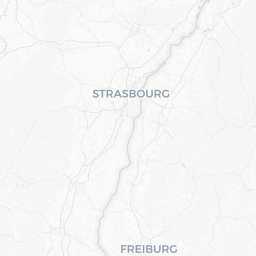
Strasbourg sits on the Rhine plain in France's Grand Est region, separated from Germany by the river itself. Its position has made it a crossroads city for centuries — passed between French and German sovereignty multiple times before 1945 — and that layered history is visible in everything from the bilingual street signs in parts of the city to the sauerkraut on restaurant menus.
The historic core, the Grande Île, is a UNESCO World Heritage Site and home to the towering Cathédrale Notre-Dame de Strasbourg, the half-timbered district of La Petite France, and a dense concentration of museums, restaurants, and market squares. Surrounding the island, modern Strasbourg functions as a seat of major European institutions: the European Parliament, the Council of Europe, and the European Court of Human Rights all have headquarters here.
The city is compact enough to explore largely on foot or by bicycle, and its tram network connects most districts efficiently. It also serves as a natural base for day trips into the Alsace wine country to the south and across the Rhine into Germany's Black Forest region.
Before You Go
Visas
France is a Schengen Area member. Visa requirements depend on your nationality and travel history. Check TravelerPulse's Visas section and consult the French Ministry of Foreign Affairs or your nearest French consulate for current, authoritative entry rules.
When to go
- Spring (April–June): Pleasant temperatures, flowers along the canal streets, and manageable crowds. A good all-around time to visit.
- Summer (July–August): Warm and busy. Outdoor terraces are lively but the cathedral square and La Petite France can feel crowded.
- Autumn (September–October): Wine harvest season begins in the surrounding Alsace villages. Comfortable temperatures and beautiful foliage.
- December: Strasbourg's Christmas market (Christkindelsmärik) is one of the oldest in Europe and draws very large crowds. Book accommodation well in advance if visiting then.
- Winter (January–February): Quietest period. Some attractions reduce hours; the city can be cold and grey but uncrowded.
Health and insurance
No specific vaccinations are required for travel to France. Ensure you have comprehensive travel insurance, including health coverage. Citizens of EU/EEA countries should carry their European Health Insurance Card (EHIC) or equivalent.
Getting There
By air
Strasbourg Entzheim Airport (SXB) handles domestic and select European routes. It is connected to the city centre by a tram-train link; verify current schedules and fares on the airport's official site. Travellers from farther afield often fly into Frankfurt Airport (FRA) or Basel-Mulhouse-Freiburg Airport (EAP/BSL) and continue by train or coach.
By train
Strasbourg is well integrated into the French TGV high-speed rail network. Journey times from Paris Gare de l'Est are approximately 1 hour 45 minutes, though this varies by service. Direct TGV connections also link the city to Lyon, Marseille, Brussels, and Frankfurt. The main station, Strasbourg-Ville, is a short walk or tram ride from the city centre. Book through SNCF (sncf-connect.com) or the Deutsche Bahn website for cross-border journeys.
By car
Strasbourg is accessible via the A35 motorway. Driving into the Grande Île is restricted; parking in the centre is limited and can be expensive. Using a park-and-ride (Parc Relais) on the tram network is a practical alternative — verify locations and current pricing locally.
By coach
Several long-distance coach operators serve Strasbourg from Paris and other European cities. Journey times are significantly longer than rail but fares are often lower.
Getting Around
Tram
Strasbourg has an extensive, modern tram network that covers the city centre and most residential districts. It is the most practical way to move between the train station, the Grande Île, the European Quarter, and outlying areas. Tickets can be purchased at platform machines; day passes are available. Verify current fares at the operator CTS (Compagnie des Transports Strasbourgeois) or through their app.
Cycling
Strasbourg consistently ranks among France's most cycle-friendly cities. A dense network of dedicated lanes covers the centre and inner neighbourhoods. The municipal Vélhop bike-share scheme offers short-term rentals at stations across the city; verify current membership options on their official site.
Walking
The Grande Île is compact and largely pedestrianised in its core. Most central sights — the cathedral, La Petite France, the main museums, and Place Kléber — are within comfortable walking distance of one another.
Taxis and rideshare
Taxis are available at the train station and via phone or app booking. Standard rideshare apps operate in the city; verify availability locally.
Things to See & Do
Cathédrale Notre-Dame de Strasbourg
The pink sandstone Gothic cathedral dominates the city skyline. Construction spanned several centuries, and the result is a mixture of Romanesque and High Gothic elements. The interior houses an astronomical clock from the 16th century that performs a mechanical display daily. A platform on the tower offers panoramic views of the city and, on clear days, the Vosges and Black Forest. Admission fees and opening hours vary by area of the cathedral — check the official cathedral website before visiting.
La Petite France
This waterfront quarter of half-timbered houses, weirs, and footbridges is the most photographed district in Strasbourg. Originally a working neighbourhood of tanners and millers, it is now lined with restaurants and artisan shops. The Ponts Couverts — a set of medieval defensive towers — and the adjacent Barrage Vauban offer views over the canal network.
Palais Rohan and the city museums
The 18th-century Palais Rohan, built as a residence for the Prince-Bishops of Strasbourg, houses three museums: the Musée des Beaux-Arts, the Musée Archéologique, and the Musée des Arts Décoratifs. The Musée d'Art Moderne et Contemporain (MAMCS) is nearby on the riverbank. Verify opening hours and admission fees directly with each institution.
The European Quarter
A short tram ride north of the centre, the European Quarter is architecturally distinct — a cluster of purpose-built institutional buildings set in parkland along the Ill river. The European Parliament building offers guided tours on certain days (pre-registration required; check europarl.europa.eu). The Parc de l'Orangerie nearby is a pleasant green space.
Day trips into Alsace
The Route des Vins d'Alsace (Alsace Wine Route) begins just south of Strasbourg and winds through villages such as Obernai, Ribeauvillé, and Colmar. Most are accessible by regional train or bus, though a car or cycling tour gives more flexibility. Colmar, with its own UNESCO-listed old town, is approximately 30 minutes by train.
Food & Drink
Alsatian cuisine
Strasbourg's food culture reflects its Franco-German position. Staple dishes include choucroute garnie (sauerkraut with various cuts of pork and sausage), tarte flambée (flammekueche — a thin-crust dough topped with crème fraîche, onion, and lardons), baeckeoffe (a slow-cooked meat and potato casserole), and foie gras d'Alsace. Portions tend to be generous.
Wine and beer
Alsace is one of France's major wine regions, producing primarily white varieties: Riesling, Gewurztraminer, Pinot Gris, and Muscat among others. Crémant d'Alsace is a sparkling wine made by the traditional method. The region also has a strong brewing tradition — Kronenbourg and Fischer both originated in Strasbourg, and several smaller craft breweries now operate in the city.
Where to eat
Restaurants cluster around the Grande Île, La Petite France, and the streets near Place du Marché-Gayot. Traditional Alsatian restaurants are called winstubs — informal wine taverns that serve regional dishes. For more contemporary cooking, a growing number of bistros and wine bars operate in the Krutenau neighbourhood east of the cathedral. Always check current opening hours and consider reserving for dinner, especially on weekends.
Markets
The covered market (Marché Couvert) near Place Broglie and outdoor markets at Place Broglie and elsewhere sell local produce, cheese, charcuterie, and Alsatian specialities. Days and hours vary by market — verify locally.
Shopping
Strasbourg's main commercial street is Rue des Grandes Arcades, which connects Place Kléber to Place Gutenberg and is lined with mainstream French and international retailers. The streets of the Grande Île — particularly around Place du Vieux-Marché-aux-Poissons and Rue du Vieux-Marché-aux-Vins — offer smaller independent shops selling Alsatian crafts, pottery, local wines, and food products.
Specifically Alsatian items worth looking for include bredele (traditional biscuits), kugelhopf moulds, painted faïence ceramics, and locally produced wines and eaux-de-vie (fruit brandies). During December, the Christmas market stalls expand across multiple squares and sell ornaments, mulled wine, seasonal biscuits, and handmade goods.
Larger chain stores and a shopping centre are near the train station. Most shops in France are closed on Sundays, though some in tourist areas may open — verify locally.
Practical Information
Money
ATMs are widely available in the city centre. Credit and debit cards (Visa, Mastercard) are accepted at most hotels, restaurants, and shops. Some smaller market stalls and winstubs may prefer or require cash — it is worth carrying a modest amount.
Internet and connectivity
Free Wi-Fi is available in many cafes, hotels, and public spaces. EU roaming rules apply for travellers from EU/EEA countries. Visitors from outside the EU should check roaming charges with their provider or consider purchasing a local SIM.
Emergency numbers
- European emergency number: 112
- French police (SNCF): 17
- Medical emergencies (SAMU): 15
- Fire brigade: 18
Useful apps and resources
- SNCF Connect (train tickets)
- CTS app (tram and bus)
- Vélhop (bike share)
- Google Maps and Citymapper work well in Strasbourg
Tipping
Service is legally included in restaurant bills in France. Leaving small additional tips (rounding up the bill or leaving a euro or two) is appreciated but not obligatory.
Safety
Strasbourg is generally a safe city for tourists. Normal urban precautions apply: be aware of your belongings in crowded areas, at the Christmas market, and on busy tram lines, where pickpocketing can occur.
The city centre, including La Petite France and the area around the cathedral, is well-lit and active in the evenings. As with any city, some outer residential districts are less travelled by tourists and warrant standard situational awareness after dark.
For the latest official travel advisories, check your home government's foreign travel advice service before departing.
Local Culture & Etiquette
Strasbourg's identity is genuinely bicultural. The Alsatian dialect (Alsatian, or Elsässerditsch) is a German dialect historically spoken in the region, though it is now used mainly by older generations. French is the language of daily life, but German is widely spoken and understood, particularly in hotels, restaurants catering to tourists, and shops near the Rhine crossings.
The city's festival calendar includes the Fête de la Musique in June (free outdoor concerts throughout the city), Strasbourg Jazz Festival in summer, and significant events tied to European institutions and Franco-German friendship. Check the Strasbourg tourist office website (visitstrasbourg.fr) for a current events calendar.
Grandes occasions in the Catholic calendar — particularly Christmas and Easter — are marked visibly in a city with deep Catholic roots. Many shops and businesses close on public holidays; plan accordingly if visiting around Ascension, Assumption, Toussaint, or Christmas.