Overview
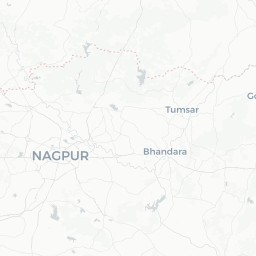
Nagpur sits almost exactly at the geographical centre of India — a fact locals take quiet pride in, marked by a zero-mile stone near the city's main post office. With a population of roughly 2.4 million, it is Maharashtra's third-largest city and functions as the winter capital of the state legislature, lending it a degree of administrative significance beyond its size.
The city is nicknamed the Orange City for the vast belt of mandarin orange orchards that once ringed it, and the fruit remains central to local identity, economy, and cuisine. Nagpur is also an important railway junction and road hub, which historically made it a trading crossroads between north, south, east, and west India.
Beyond the oranges, Nagpur draws visitors as a jumping-off point for some of India's finest tiger reserves — Tadoba-Andhari, Pench, and Navegaon-Nagzira are all within a few hours' drive. The city itself rewards a couple of days of exploration: Deekshabhoomi, one of Buddhism's most sacred modern sites in India, draws pilgrims year-round, while the old city quarters carry the layered history of Gond kingdoms, Maratha rule, and British administration.
Before You Go
Visas
Most international visitors require a visa to enter India. Requirements vary significantly by nationality, purpose of travel, and duration of stay. Check TravelerPulse's Visas section for guidance relevant to your passport, and always verify current rules directly with India's Bureau of Immigration (indianvisaonline.gov.in or your nearest Indian consulate).
Health
Consult a travel medicine clinic well before departure. Depending on your home country and recent travel history, doctors commonly discuss vaccinations for hepatitis A, typhoid, and tetanus for visitors to central India. Malaria prophylaxis may be relevant, particularly if you plan safari travel in forested areas — seek medical advice. Drink only sealed bottled or properly treated water.
Climate
Nagpur has a pronounced three-season cycle. Summers (March–June) are intense, with temperatures regularly exceeding 40 °C; travel during this period requires careful planning. The monsoon (July–September) brings heavy but often irregular rainfall. October to February is the most comfortable window: daytime temperatures range roughly 20–30 °C, nights can be cool in December–January, and wildlife parks are fully open.
Packing notes
- Light, breathable cotton for most of the year; a light layer for winter evenings.
- Modest clothing is respectful at temples, mosques, and Deekshabhoomi.
- Sunscreen and a hat are essential year-round.
- Carry some cash in INR; while UPI digital payments are widespread locally, smaller vendors and rural safari zones may not accept cards.
Getting There
By Air
Dr. Babasaheb Ambedkar International Airport (NAG) is located roughly 8 km south of the city centre. It handles a growing number of domestic routes, connecting Nagpur to Mumbai, Delhi, Hyderabad, Kolkata, and several other Indian cities. International connectivity is limited; most international travellers route through Mumbai or Delhi. Verify current routes and schedules with airlines or your booking platform, as service patterns change.
By Train
Nagpur Junction is one of the busiest railway junctions in central India, with trains connecting to Mumbai, Delhi, Chennai, Kolkata, Hyderabad, and dozens of smaller cities. The Vidarbha Express, Seva Express, and several other named trains link Nagpur to major cities; journey times vary considerably. Book well in advance on IRCTC (irctc.co.in) — reservations fill quickly, especially around national holidays.
By Road
Nagpur sits at the intersection of National Highway 44 (Srinagar–Kanyakumari) and National Highway 6, making it accessible by long-distance bus from Pune, Mumbai, Hyderabad, and other regional centres. State-run MSRTC buses and several private operators serve these routes. Journey times can be long; overnight sleeper buses are a common option for budget travellers.
Getting Around
Within the City
Nagpur has a Metro Rail system (Nagpur Metro, Phase 1 operational) with two corridors that serve key parts of the city including the railway station and some commercial areas. It is clean, air-conditioned, and an affordable way to cover central routes — verify the current network map and hours on the Nagpur Metro Rail Corporation website before travelling.
Auto-rickshaws are the backbone of local transport and available throughout the city. Insist on the meter or agree on a fare before boarding. App-based ride services (Ola and Uber both operate here) offer a metered alternative with upfront pricing.
City buses run by MSRTC/Nagpur Municipal Transport cover a wide area but routes can be difficult for newcomers to navigate without local assistance.
To Wildlife Parks
For day trips or overnight visits to Tadoba, Pench, or other reserves, private taxis and car rentals are the most practical option. Distances and road quality vary — confirm drive times and road conditions locally, and book safari permits well in advance through the Maharashtra Forest Department's official portal (mahaforest.gov.in or the dedicated Tadoba/Pench booking sites), as entry is capped and slots sell out quickly.
Things to See & Do
Deekshabhoomi
One of the most significant Buddhist monuments in modern India, Deekshabhoomi is the site where Dr. B. R. Ambedkar, the architect of the Indian constitution and champion of Dalit rights, converted to Buddhism along with hundreds of thousands of followers on 14 October 1956. The central stupa — among the largest hollow stupas in Asia — is an imposing and peaceful structure. The site draws pilgrims, scholars, and curious visitors year-round. Dress modestly and maintain a respectful tone; remove footwear before entering sacred areas. Verify opening hours before visiting.
Sitabuldi Fort
Perched on a twin-hillock in the heart of the city, Sitabuldi Fort was the site of a decisive engagement during the Third Anglo-Maratha War (1817). The fort is under the Indian Army and access for civilians is typically restricted to specific days — most notably around Vijaya Dashami. Confirm access rules locally before making the trip.
Nagpur Zero Mile Stone
Near the central telegraph office, this modest but symbolically loaded landmark marks the geodetic centre of India. Worth a quick visit if you're in the area, primarily for its historical and cartographic significance rather than any grand spectacle.
Ambazari Lake and Garden
The largest of Nagpur's interconnected chain of lakes, Ambazari offers a pleasant space for an early-morning or evening walk. The adjacent garden is well maintained and popular with families. Boating facilities are available seasonally — verify locally.
Maharaj Bagh Zoo
A small but well-regarded zoo in the city centre, set within the grounds of a former royal garden. It houses a range of Indian wildlife including tigers and leopards. A useful orientation before heading to the tiger reserves; verify current admission fees and hours on arrival.
Day Trips: Tiger Reserves
- Tadoba-Andhari Tiger Reserve (~150 km south): Maharashtra's oldest and most visited reserve, with one of India's higher tiger-sighting rates. Safari permits must be booked in advance.
- Pench Tiger Reserve (~75 km south): Straddles Maharashtra and Madhya Pradesh; the landscape said to have inspired Kipling's The Jungle Book. Good for tiger, leopard, wild dog, and birdlife.
- Navegaon-Nagzira Tiger Reserve (~140 km east): Quieter, less commercialised, strong for birdwatching and biodiversity.
Food & Drink
What to Eat
Nagpur's food culture sits at a junction of Vidarbha Maharashtrian cooking and influences from neighbouring Telangana and Madhya Pradesh, resulting in cuisine that tends to be spicier and more robust than that of coastal Maharashtra.
Saoji cuisine is the defining local food tradition — a style of cooking using a complex blend of spices that produces intensely flavoured meat curries (mutton and chicken are most common). Saoji restaurants are found throughout the city; the flavour profile is not for the heat-averse. Many restaurants are unpretentious, neighbourhood places rather than formal dining establishments.
Tarri Poha — flattened rice topped with a spiced chickpea curry (tarri) — is the canonical Nagpur breakfast, eaten at small roadside stalls and teashops across the city from early morning. Worth seeking out on your first day.
Oranges and orange-based products are worth sampling: fresh-squeezed orange juice, orange barfi (a milk-based sweet), and oranges sold by the kilogram at roadside stands.
Practical Notes
- Pure-vegetarian options are widely available across price points.
- Alcohol is available at licensed restaurants and wine shops; some areas and establishments are dry.
- Tap water is not safe to drink; rely on sealed bottled water or filtered water from your hotel.
Shopping
What to Buy
Nagpur is a trading hub for the Vidarbha region, and its markets reflect that breadth.
- Oranges: If travelling between November and February, buying a bag of Nagpur mandarins directly from market vendors or roadside stands is an experience in itself. Itwari and Sitabuldi markets are good starting points.
- Chanderi and Paithani-style sarees: Nagpur's textile shops stock a wide range of Maharashtra's woven traditions. The Itwari area has a concentration of fabric merchants.
- Zari work: The city has a tradition of zari (gold and silver thread) embroidery used in sarees and dress fabric.
- Bamboo and tribal crafts: Items sourced from surrounding Vidarbha districts, including bamboo goods and hand-painted objects, appear in the market areas and some specialty craft shops.
Itwari and Sitabuldi are the main traditional shopping corridors. Modern malls exist on the city's periphery for those who prefer fixed prices and air conditioning.
Practical Information
Money
ATMs are widely distributed across the city; major banks (SBI, HDFC, ICICI, etc.) are reliable. UPI-based digital payment (GPay, PhonePe, Paytm) is ubiquitous among vendors, but keep some cash on hand for rickshaws, small street stalls, and rural areas near wildlife parks.
Connectivity
Indian SIM cards (Jio, Airtel, Vi) are readily available at the airport and across the city with 4G coverage. Bring an unlocked phone; international roaming tends to be expensive. Most hotels and many cafés offer Wi-Fi.
Emergency Contacts
- Police: 100
- Ambulance: 108
- Fire: 101
- These are nationwide Indian emergency numbers — verify any local Nagpur-specific numbers with your hotel.
Medical
Nagpur has several multi-specialty hospitals. Your hotel or accommodation can direct you to the nearest appropriate facility. Travel insurance that includes medical evacuation is strongly recommended for all visitors to India.
Power
India uses 230V/50Hz. Plug types C, D, and M are most common. Bring a universal adapter.
Safety
Nagpur is generally considered one of the safer large cities in India for travellers. Standard urban precautions apply: keep valuables secure in crowds, be alert to your surroundings at night, and use well-lit, busy routes after dark.
Women travelling alone report mixed experiences, as is common across Indian cities; travelling in groups after dark, using app-based taxis rather than hailing rides on the street, and dressing modestly in conservative neighbourhoods are practical measures that many female travellers adopt.
Petty scams targeting tourists (overcharging in auto-rickshaws, 'commission' arrangements between drivers and shops) do occur. Using a meter or app-based cab, and politely declining unsolicited help or tours from strangers at transit points, reduces exposure to most of these.
If visiting wildlife reserves, follow all ranger and guide instructions strictly. Tiger reserves are active wildlife areas; trails outside designated zones are prohibited for good reason.
Local Culture & Etiquette
Nagpur has a layered cultural identity shaped by its Gond tribal heritage, Maratha history, British-era administrative role, and its central place in the Ambedkarite Buddhist movement of 20th-century India. The latter is particularly visible: the city has a large and active Buddhist community, and sites like Deekshabhoomi carry deep spiritual and political significance for millions of people across India.
The city also holds historical importance in the history of the Rashtriya Swayamsevak Sangh (RSS), founded here in 1925 — a fact reflected in local political culture.
Festivals worth noting:
- Ambedkar Jayanti (14 April): Large gatherings at Deekshabhoomi; also observed as a public holiday.
- Dhamma Chakra Pravartan Din (14 October): Anniversary of Ambedkar's conversion; draws enormous pilgrim crowds to Deekshabhoomi — plan accommodation well in advance if visiting at this time.
- Diwali and Dussehra: Celebrated citywide with markets, lights, and processions.
- Nagpur Orange Festival: Typically held in winter; timings vary, check locally.
Marathi is the dominant language of daily life; even basic courtesy phrases in Marathi or Hindi are appreciated by locals. Removing footwear before entering places of worship — whether temple, mosque, or stupa — is not optional; follow any posted instructions at religious sites.