Translate
Overview
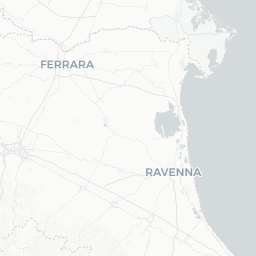
Ravenna is a mid-sized city on the Adriatic coastal plain of Emilia-Romagna, about 10 km inland from the sea. Despite its modest present-day size, it carries an outsized historical footprint: it served as the capital of the Western Roman Empire in the fifth century, then of the Ostrogothic Kingdom, and later of the Byzantine Exarchate. Each of those eras left architectural evidence that has survived largely intact.
The city's primary claim to global attention is its collection of late-antique and early medieval mosaic cycles, recognised collectively as a UNESCO World Heritage Site since 1996. These works — spread across eight monuments — are considered among the finest examples of mosaic art anywhere in the world, predating and arguably influencing much of what came later in Constantinople and beyond.
Ravenna is also the final resting place of Dante Alighieri, who died here in 1321 while in political exile from Florence. The city maintains his tomb and a small museum dedicated to his life and work, making it a point of literary pilgrimage as well as an art-historical destination.
Day-to-day, Ravenna functions as a prosperous provincial city with an active port district (Porto Corsini), a university presence, and a well-regarded summer festival programme. It is manageable on foot, relatively uncrowded compared to Italy's headline cities, and makes a practical base for exploring the surrounding Po Delta wetlands and Adriatic coast.
Before You Go
Visas
Italy is a member of the Schengen Area. Visa requirements vary significantly by nationality. Check TravelerPulse's Visas section and consult the official Italian Ministry of Foreign Affairs or your nearest Italian consulate well before travel.
Health
No vaccinations are specifically required for travel to Ravenna beyond standard routine immunisations. The city has public and private healthcare facilities; EU/EEA travellers should carry a European Health Insurance Card (EHIC). Travellers from other regions should arrange adequate travel health insurance before departure.
What to pack
- Comfortable walking shoes: the historic centre is compact but entirely on foot
- A light layer even in summer — churches and mausoleums maintain a cool interior temperature year-round
- Sun protection for late spring and summer visits
- Cash: while card payments are widely accepted, some smaller establishments and museum ticket desks may prefer cash
Seasonal notes
Summers (July–August) are warm to hot and humid, with temperatures regularly exceeding 30 °C. The city is noticeably busier during the Ravenna Festival (typically June–July); accommodation books up earlier during this period. Winters are cool and damp, with occasional fog — most major monuments remain open year-round, making an off-season visit feasible.
Getting There
By air
Ravenna does not have its own commercial airport. The nearest major airport is Bologna Guglielmo Marconi Airport (BLQ), approximately 75–80 km west, with good connections across Europe and some intercontinental routes. Rimini Federico Fellini International Airport (RMI), around 50 km south, handles seasonal European charter and low-cost traffic. From either airport, onward travel to Ravenna is possible by a combination of bus and rail or by hire car; verify current transfer options on the respective airport websites.
By train
Ravenna has its own railway station on the Ferrara–Ravenna and Ravenna–Rimini lines. Direct regional services connect to Bologna (journey times vary; typically 1.5–2 hours with a change at Ferrara or Castel Bolognese), and to Rimini on the Adriatic coast. Trenitalia operates most services; check schedules at trenitalia.com.
By road
Ravenna is reached via the A14 Adriatic motorway (Bologna–Taranto) with a dedicated exit. The city is also accessible via the SS16 Adriatica state road. Driving into the historic centre is restricted by a ZTL (Zona Traffico Limitato); confirm your accommodation's parking arrangements before arrival.
Getting Around
The historic centre of Ravenna is compact and best explored on foot. All eight UNESCO mosaic monuments are within a roughly 1.5 km radius of the central Piazza del Popolo, and most visitors cover the main sites without any public transport.
Cycling is extremely popular and well-suited to Ravenna's flat terrain. The city has a public bike-share scheme and numerous rental outlets; verify current operators and availability locally. Cycling paths extend outward toward the Adriatic coast and into the Po Delta park.
Local buses operated by START Romagna serve the wider municipality, including the beach resorts of Marina di Ravenna and Punta Marina. Bus routes and timetables are available on the START Romagna website or at the main bus station adjacent to the railway station.
Taxis are available at the railway station and at a few stands in the centre. Ride-hailing apps have limited penetration in smaller Italian cities; verify availability on arrival.
Things to See & Do
UNESCO Mosaic Monuments
The eight inscribed monuments are the centrepiece of any visit. They include the Mausoleum of Galla Placidia (fifth century, renowned for its deep-blue celestial vault), the Basilica of San Vitale (sixth century, featuring elaborate Imperial mosaic panels of Justinian and Theodora), the Baptistery of Neon (the oldest surviving building in Ravenna), the Arian Baptistery, the Archiepiscopal Chapel, the Mausoleum of Theodoric, the Basilica of Sant'Apollinare Nuovo, and the suburban Basilica of Sant'Apollinare in Classe. A combined ticket covering most sites is available; verify current pricing and opening hours at ravennamosaici.it or at the ticket offices.
Dante's Tomb and Museum
The Tomba di Dante, adjacent to the Basilica of San Francesco, is a small neoclassical structure housing the poet's remains. Entry has historically been free, though verify current arrangements locally. The nearby Museo Dantesco provides context on Dante's exile and death in Ravenna.
MAR – Museo d'Arte della Città di Ravenna
The city art museum holds a strong collection of modern and contemporary works alongside historical pieces, and often hosts temporary exhibitions. Check current listings at mar.ra.it.
Po Delta and Coast
The Parco Regionale del Delta del Po begins just north of Ravenna, offering birdwatching, cycling, and boat excursions through wetlands and lagoons. The Adriatic beach resorts south and north of the city (Marina di Ravenna, Punta Marina, Lido di Classe) are popular with Italians in summer and provide a contrast to the inland historic core.
Ravenna Festival
Held primarily in June and July, the Ravenna Festival is a significant classical music, opera, and dance event that uses the city's historic venues — including churches and outdoor spaces — as performance stages. Tickets and programmes are available at ravennafestival.org.
Food & Drink
Ravenna sits within Emilia-Romagna, Italy's most celebrated food region, so the local table draws on a rich tradition. Expect fresh egg pasta — tagliatelle, garganelli, passatelli in brodo — alongside local cured meats and aged cheeses. Being close to the Adriatic, seafood also features prominently: grilled fish, brodetto (a regional fish stew), and fried mixed seafood are common restaurant offerings.
The historic centre has a good concentration of trattorie, osterie, and cafés clustered around Piazza del Popolo and the surrounding streets. For a broader market experience, the Mercato Coperto (covered market) near the centre is a practical place to browse local produce, cheese, and cured meats.
Romagna is also wine-producing territory. Sangiovese di Romagna is the dominant red; Albana di Romagna (a DOCG white) and Pagadebit are local whites worth trying. Cocktail culture is active in the city's bars, particularly in the early evening during the traditional aperitivo hour.
Prices for eating out vary widely. A full meal at a mid-range trattoria will cost more than a quick pizza or takeaway piadina — the flatbread of Romagna, filled with cheese, cured meats, or vegetables — which is widely available from dedicated street stalls and is both economical and typical of the region.
Shopping
Ravenna's most distinctive local craft is mosaic work, and the city has several studios and shops selling handmade mosaic pieces, from small decorative tiles to framed artworks. The area around Via di Roma and the streets near San Vitale has a concentration of artisan mosaic shops. Quality and price vary considerably; established studios often welcome visitors to observe work in progress.
For everyday shopping, the pedestrianised streets around Piazza del Popolo — including Via Cavour and Corso Garibaldi — have a mix of independent boutiques, Italian chain stores, and bookshops. A weekly outdoor market takes place in the city; verify current days and locations with the local tourist office (IAT Ravenna).
Food souvenirs worth considering include local pasta, Romagna wine, and packaged piadina mixes, all available at the covered market and specialist food shops.
Practical Information
Tourist Information
The city's official tourist office (IAT Ravenna) is located in the centre and provides maps, combined museum tickets, and current event listings. The official city tourism portal is turismo.ra.it.
Emergency Numbers
- 112 — single European emergency number (police, ambulance, fire)
- 118 — medical emergencies (Italy-specific)
- 113 — state police
Connectivity
Free public Wi-Fi is available in parts of the centre. Mobile coverage (4G/5G) from major Italian operators is reliable throughout the city. EU travellers benefit from roaming agreements; non-EU travellers should check their carrier's international data rates or consider purchasing a local SIM.
Money
ATMs (Bancomat) are available at multiple points in the centre and near the railway station. Notify your bank before travel to avoid card blocks. The ZTL camera system means that driving into the restricted centre without authorisation results in automatic fines; check the boundaries carefully if arriving by car.
Accessibility
Ravenna's flat terrain is generally favourable for mobility-limited visitors. Some historic monuments have limited internal accessibility due to their age and protected status; check individual site websites or contact the IAT for current accessibility information.
Safety
Ravenna is considered a safe city by Italian and European standards. Serious crime affecting tourists is uncommon. Standard urban precautions apply: be aware of your belongings in crowded areas such as markets and around the railway station, and avoid leaving valuables visible in parked vehicles.
The railway station area warrants the same level of general alertness as any provincial Italian station but is not considered a high-risk zone. Travel insurance covering medical costs, trip disruption, and theft is strongly recommended regardless of destination.
Local Culture & Etiquette
Ravenna's cultural identity is shaped to an unusual degree by its layered history. Residents maintain a quiet pride in the city's UNESCO status, but the monuments are integrated into everyday urban life rather than being treated as a separate tourist district — the Basilica of Sant'Apollinare Nuovo, for instance, is an active place of worship as well as a heritage site.
The Dante connection is taken seriously: the city has maintained the poet's tomb for centuries in the face of periodic Florentine requests for his return, and local cultural programming regularly references his legacy. Visitors engaging with this history are generally well received.
As in most of Emilia-Romagna, civic life revolves strongly around food, local festivals, and the passeggiata — the early-evening stroll through the centre. Sunday morning is notably quiet in the historic core. Church dress codes (covered shoulders and knees) apply at all the major mosaic basilicas; some sites provide disposable covering wraps at the entrance for visitors who need them.