Overview
Bilbao is the largest city in the Basque Country and sits in a narrow river valley carved by the Nervión, roughly 14 km from the Bay of Biscay. For much of the 20th century it was an industrial port and steel-producing hub; a severe economic decline in the 1980s prompted a sweeping regeneration effort that is now studied in urban-planning circles worldwide.
The centrepiece of that transformation is the Guggenheim Museum Bilbao, which opened in 1997 and drew international attention almost overnight. But the city's appeal goes well beyond one building. The medieval Casco Viejo (Old Quarter), the covered Mercado de la Ribera, a compact and walkable riverside promenade, and one of Spain's most serious food cultures combine to make Bilbao a genuinely rewarding urban destination.
With a population of around 347,000, Bilbao feels manageable rather than overwhelming. Most major sights are within walking distance of one another, and the metro and tram network handles everything else efficiently. Visitors often arrive expecting a short stopover and end up extending their stay.
Before You Go
Visas
Spain is a Schengen Area member. Visa requirements vary significantly by nationality. Do not rely on this guide for visa rules — check TravelerPulse's Visas section and consult Spain's official immigration authority (Ministerio del Interior / Secretaría de Estado de Migraciones) before travelling.
Climate
Bilbao has an oceanic climate: mild temperatures year-round but notably rainy, particularly in autumn and winter. Summers are warm rather than hot (typically 20–25 °C), and snow in the city itself is rare. Pack a light waterproof layer regardless of when you visit.
Health
No vaccinations are specifically required for travel to Spain. EU/EEA citizens should carry a European Health Insurance Card (EHIC); travellers from outside the EU should arrange comprehensive travel health insurance. Pharmacies (farmacias, identified by a green cross) are plentiful and pharmacists are trained to advise on minor ailments.
Electricity
Spain uses Type C and Type F sockets at 230 V / 50 Hz. Travellers from the UK, US, or countries with different standards should bring appropriate adapters and check whether their devices are dual-voltage.
Getting There
By Air
Bilbao Airport (BIO), also called Loiu Airport, lies roughly 12 km northeast of the city centre. It handles a range of European routes. An airport bus (Bizkaibus line A3247) runs between the airport and central Bilbao; verify current schedules and fares at bizkaia.eus or on arrival. Taxis are available outside arrivals — confirm that the meter is running before departure.
By Train
Renfe operates long-distance services to Bilbao's Abando station from Madrid and other Spanish cities. Journey times and frequencies change seasonally; check renfe.com for current timetables and booking. A separate narrow-gauge network (EuskoTren/Euskotren) connects Bilbao to smaller Basque towns and to San Sebastián.
By Bus
Bilbao's Termibus station is a major hub for long-distance coach services across Spain and to several European destinations. Several operators serve the route; compare schedules and fares through aggregator sites or at the terminal directly.
By Road
Bilbao is accessible via the AP-8 (coastal motorway) and AP-68 from Zaragoza and the interior. Note that the Basque Country operates its own toll system on some roads — verify current charges locally.
Getting Around
Bilbao's city centre is compact enough that most visitors walk between the main sights. The Guggenheim, the Casco Viejo, and the Abando transport hub form a rough triangle navigable on foot in 20–30 minutes.
Metro
Bilbao Metro (metro.bilbao.eus) covers the city and extends into the wider metro area. Designed by Norman Foster, the stations themselves are architecturally distinctive. A rechargeable Barik card reduces per-journey costs compared with single tickets — pick one up at any station machine.
Tram
Eusko Tran runs a single tram line along the Nervión riverbank, connecting Atxuri, Guggenheim, and further west. It is useful for moving between the old town and the museum district without backtracking.
Cycling
Bilbao has expanded its cycle lane network in recent years. A public bike-sharing scheme (Bilbike) operates in the city; check bilbike.eus for current docking stations and subscription options. The riverside path along the Nervión is a pleasant flat route.
Taxis and Rideshare
Licensed taxis are metered and generally reliable. Rideshare apps also operate in Bilbao — verify which are currently active, as the market changes.
Things to See & Do
Guggenheim Museum Bilbao
Frank Gehry's titanium-clad building on the Nervión is arguably the most discussed piece of late-20th-century architecture in Europe. The permanent collection focuses on contemporary and modern art, and temporary exhibitions rotate throughout the year. Admission fees and opening hours change — verify at guggenheim-bilbao.eus before visiting. The surrounding plaza, with Jeff Koons' floral sculpture Puppy and Louise Bourgeois' Maman spider, is freely accessible at all times.
Casco Viejo (Old Quarter)
The Siete Calles (Seven Streets) form the medieval core of Bilbao, a dense grid of narrow lanes packed with pintxos bars, independent shops, and the Gothic Cathedral of Santiago. The area is best explored on foot in the early evening, when locals head out for the traditional txikiteo (bar-hopping ritual).
Mercado de la Ribera
One of the largest covered markets in Europe by floor area, the Ribera Market sits on the riverbank in the Casco Viejo and was renovated in recent years. It operates as a working food market on weekday mornings and also hosts a pintxos bar area. Verify current opening hours locally.
Museo de Bellas Artes
Bilbao's Fine Arts Museum holds a collection spanning Flemish masters through to 20th-century Spanish art and is considered one of the better art museums in Spain outside Madrid. It sits adjacent to Doña Casilda Iturrizar Park, a pleasant green space worth a walk.
Funicular de Artxanda
A short funicular ride from the Casco Viejo takes you to the hilltop of Artxanda, which offers a panoramic view over the entire Bilbao basin and the surrounding green hills. Verify operating hours and fares at the station.
Day Trips from the City
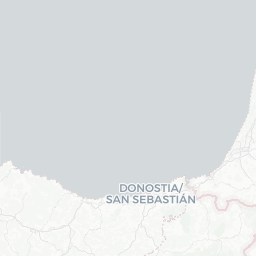
The coastal town of Getxo, the surf beach at Sopelana, and the historic town of Gernika (Guernica) are all reachable by metro or train within an hour. San Sebastián is approximately 100 km east.
Food & Drink
Basque cuisine has a serious international reputation, and Bilbao is a practical gateway to it. The city supports a dense concentration of pintxos bars, traditional restaurants (asadores), and a small cluster of Michelin-starred establishments. Eating here tends to be participatory rather than performative — locals eat standing at bars, moving between venues.
Pintxos
Pintxos (the Basque equivalent of tapas, though locals will note the distinction) are small snacks, typically served on bread with a toothpick. The Casco Viejo and Indautxu neighbourhoods have high concentrations of pintxos bars. Standard etiquette: order drinks and pintxos at the bar, keep your toothpicks so staff can tally your bill, and move on after a drink or two — that is the local rhythm.
Traditional Dishes
Look for bacalao (salt cod, prepared in multiple Basque ways including pil-pil and a la vizcaína), txangurro (spider crab), marmitako (tuna and potato stew), and grilled beef or lamb chops at an asador. Idiazabal is a local smoked sheep's-milk cheese worth seeking out.
Drinks
Txakoli (a slightly sparkling dry white wine from the Basque coast) is the house pour at most pintxos bars. Sidra (cider) is common. Spanish wines from Rioja — produced close to Bilbao — are widely available. Coffee culture follows the broader Spanish pattern: cortado, café con leche, and espresso dominate.
Meal Times
Bilbao follows Spanish meal rhythms: lunch is typically 14:00–16:00 and the main meal of the day; dinner rarely begins before 21:00. Tourists who arrive at restaurants at 18:00 or 19:00 may find them closed or just beginning prep. The pintxos bar route (txikiteo) is usually done 12:00–14:00 and again 19:00–21:00.
Shopping
Bilbao's main commercial street, Gran Vía de Don Diego López de Haro, runs through the Ensanche district and hosts international brands alongside Spanish chains. The Ensanche neighbourhood more broadly has a mix of boutiques, department stores, and specialist shops.
The Casco Viejo is better for independent shops, including local food products (Idiazabal cheese, txakoli, conserves), Basque craft items, and independent bookshops. The Mercado de la Ribera is the most practical place to buy local food products to take home.
Note that EU customs rules govern what food products travellers can take outside the EU. If you are travelling beyond Spain to a non-EU country, verify current regulations before purchasing perishables.
Practical Information
Emergency Numbers
The pan-European emergency number 112 reaches police, fire, and ambulance services from any phone in Spain, including mobile phones without a SIM. Local police can also be reached on 092; national police on 091.
Money
ATMs are widely available throughout central Bilbao. Major credit and debit cards are accepted in most restaurants, hotels, and shops, though some smaller pintxos bars and market stalls operate cash-only. Notify your bank before travelling to avoid cards being blocked.
Connectivity
Free Wi-Fi is available in many cafés, hotels, and public spaces. EU travellers using EU-issued SIM cards benefit from roaming regulations; travellers from outside the EU should check roaming costs with their provider or consider a local SIM on arrival.
Accessibility
The Guggenheim and other major museums are fully accessible. The Casco Viejo's medieval street layout has some limitations — narrow lanes and uneven surfaces — though the main pedestrian routes are generally manageable. The metro has elevators at most stations; verify at metro.bilbao.eus for specific stations.
Tipping
Tipping is not obligatory in Spain and is not as embedded culturally as in North America. Rounding up a bill or leaving small change after a meal is common and appreciated; a more deliberate tip for excellent service is welcomed but not expected.
Safety
Bilbao is generally considered a safe city for travellers. Violent crime against tourists is uncommon. The standard precautions for any urban environment apply: be attentive to your belongings in crowded areas such as markets, public transport, and major tourist sites, and avoid leaving valuables visible in parked vehicles.
The city centre is well lit and reasonably active into the late evening; the txikiteo culture means bars and restaurants in the Casco Viejo and Ensanche stay busy until midnight and beyond at weekends. As in most cities, some peripheral areas are quieter at night — exercise standard judgement.
For the latest travel advisories specific to your nationality, consult your government's official foreign travel advice service before departure.
Local Culture & Etiquette
Basque identity is distinct within Spain and is a source of genuine pride for locals. The Basque language, Euskara, is one of the oldest and most linguistically isolated languages in Europe — it is unrelated to any other known language family. Visitors will see it on street signs, menus, and official communications alongside Spanish. Learning a few words (eskerrik asko — thank you; kaixo — hello) is received warmly.
The Aste Nagusia (Big Week) festival in August is Bilbao's major annual celebration, lasting roughly nine days with concerts, fireworks, and street events citywide. It draws large crowds — accommodation books up well in advance if you plan to visit during this period.
Basques have a strong tradition of communal eating through gastronomic societies (sociedades gastronómicas or txokos) — private members' clubs where members cook for one another. Visitors are rarely admitted, but understanding their existence helps explain the depth of food culture in the city.
Football (soccer) carries particular cultural weight: Athletic Club de Bilbao (Athletic Club) maintains a long-standing policy of fielding only players from the Basque Country. Matches at San Mamés stadium are significant local events; tickets for high-profile games sell quickly.