Overview
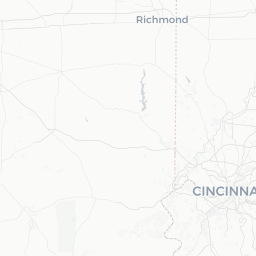
Cincinnati sits on the north bank of the Ohio River in southwestern Ohio, directly across from northern Kentucky. Founded in 1788, it grew into one of the Midwest's most significant 19th-century cities, earning the nickname "Queen City" as a center of pork processing, brewing, and river trade. That history is still legible in its streetscapes, particularly in Over-the-Rhine, one of the largest intact urban historic districts in the United States.
Today Cincinnati is a mid-sized city with a surprisingly dense cultural offering: world-class art and natural history museums, a nationally recognized music scene rooted in its historic Music Hall, a lively food culture, and passionate sports fandom around the Reds (MLB) and Bengals (NFL). The Ohio River and the hills that rise from it give the city a distinctive topography that rewards exploration on foot and by bike.
The city has undergone significant reinvestment since the early 2010s, with Over-the-Rhine in particular transforming into a hub of independent restaurants, bars, and boutiques while retaining much of its 19th-century German immigrant architecture.
Before You Go
Visas
Cincinnati is in the United States. Entry requirements depend entirely on your nationality. Check TravelerPulse's Visas section and the official U.S. Customs and Border Protection website (cbp.gov) for current requirements before booking.
When to visit
- Spring (April–May): Pleasant temperatures, blooming parks, and the start of baseball season make this the most comfortable window.
- Summer (June–August): Hot and humid, but outdoor festivals are plentiful. The Ohio River is lively.
- Fall (September–October): Comfortable weather, fall foliage on the surrounding hills, and football season.
- Winter (November–March): Cold with occasional snow. Indoor cultural attractions remain open, and crowds thin considerably.
Health and travel insurance
The United States has no universal public healthcare for visitors. Comprehensive travel insurance with medical coverage is strongly recommended before arrival. Verify your policy covers emergency medical evacuation.
What to pack
Cincinnati weather can be variable. Layers are advisable in spring and fall. Summers call for light clothing and sun protection; winters require a proper coat, hat, and gloves.
Getting There
By air
Cincinnati/Northern Kentucky International Airport (CVG) is located approximately 13 miles south of downtown Cincinnati in Hebron, Kentucky. Despite its name, it serves the full Cincinnati metropolitan region. Several major U.S. carriers and select international routes operate here. Check current routes and schedules directly with airlines or on the CVG airport website.
By car
Cincinnati sits at the junction of several major interstates, including I-71, I-75, and I-74, making it accessible by road from Columbus (~1.5 hours), Louisville (~1.5 hours), Dayton (~1 hour), and Indianapolis (~2 hours). Parking downtown is available in both street meters and garages; verify current rates locally.
By bus
Amtrak does not serve Cincinnati directly. Greyhound and FlixBus provide intercity bus connections from major regional cities. Verify current schedules and stops on their official websites before travel.
From the airport to downtown
Ride-share services (Uber, Lyft) and taxis serve CVG. Rental car desks are available at the airport. A dedicated fixed transit link between CVG and downtown does not currently exist; verify locally for any service updates.
Getting Around
Public transit
The Southwest Ohio Regional Transit Authority (SORTA) operates the Metro bus network throughout Cincinnati and surrounding Hamilton County. Route maps and schedules are available on the Go Metro website. A streetcar line, the Cincinnati Bell Connector (now operating as Cincinnati Streetcar), runs a fixed loop through downtown and Over-the-Rhine; verify current operating status and fares locally.
On foot
Downtown Cincinnati and Over-the-Rhine are walkable for most visitors, though the city's hilly topography can be tiring. The riverfront area, including Smale Riverfront Park, is flat and pedestrian-friendly.
By bike
Cincinnati's CoGo bike-share program provides docked and dockless bikes at stations throughout central neighborhoods. A developing trail network connects the riverfront and several neighborhoods; confirm current station availability on the CoGo website.
By car
A car is helpful for reaching neighborhoods beyond the urban core, suburban attractions, and day trips. Ride-share services are widely available downtown and in most central neighborhoods.
Skyline Chili Drive and Hills
Note that Cincinnati's residential neighborhoods spread across a series of steep hills connected by arterials. Driving between some neighborhoods involves navigating narrow, winding streets.
Things to See & Do
Museums and culture
- Cincinnati Art Museum (Eden Park): Free general admission to the permanent collection, which spans 6,000 years of art history. Verify current special exhibition fees on the museum's website.
- National Underground Railroad Freedom Center (downtown, riverfront): Serious and well-curated museum dedicated to the history of slavery, freedom, and the Underground Railroad. Cincinnati's position on the Ohio River—a crossing point from slave states to free states—makes this location historically significant.
- Cincinnati Museum Center at Union Terminal: A 1933 Art Deco train station converted into a campus housing the Cincinnati History Museum, Museum of Natural History & Science, and the Cincinnati Children's Museum. The building itself is a landmark.
- Contemporary Arts Center: Rotating exhibitions of contemporary art in a Zaha Hadid-designed building downtown.
- Taft Museum of Art: A Federal-style historic house museum with a strong collection of European paintings and decorative arts.
Neighborhoods to explore
- Over-the-Rhine (OTR): Dense 19th-century streetscapes with independent shops, restaurants, and bars. Washington Park anchors the neighborhood.
- Findlay Market: Ohio's oldest continuously operated public market, open on weekends and select weekdays. Verify current hours before visiting.
- Eden Park: Hilltop park with the art museum, Mirror Lake, and sweeping views of the Ohio River and northern Kentucky.
- Mount Adams: A hilltop neighborhood with bars, restaurants, and access to Eden Park.
- Covington, KY (across the river): Technically a separate city, but easily walkable via the John A. Roebling Suspension Bridge. The MainStrasse Village neighborhood has restaurants and antique shops.
Sports
The Cincinnati Reds (MLB) play at Great American Ball Park on the riverfront. The Cincinnati Bengals (NFL) play at Paycor Stadium, adjacent to the ballpark. FC Cincinnati (MLS) plays at TQL Stadium in the West End neighborhood. Verify current schedules and ticket availability on team websites.
Outdoors
- The Ohio River Trail and Smale Riverfront Park offer waterfront walking and cycling.
- Sharon Woods, Winton Woods, and Little Miami State Park provide hiking and outdoor recreation outside the city core; verify access details locally.
Food & Drink
Cincinnati-style chili
Cincinnati chili is distinct from Texas-style chili: it is a thin, spiced meat sauce served over spaghetti ("two-way"), topped with shredded cheddar ("three-way"), diced onions ("four-way"), or kidney beans ("five-way"). Skyline Chili and Gold Star Chili are the two dominant local chains, with numerous locations throughout the city. Whether or not you enjoy it, trying it is considered a cultural experience.
Dining scene
Over-the-Rhine has become the center of Cincinnati's independent restaurant scene, with a range of cuisines from casual to upscale. Findlay Market and its surrounding blocks concentrate food vendors, butchers, and specialty grocers. The Northside, Hyde Park, and Clifton neighborhoods also have established local dining options.
Craft beer
Cincinnati has a long brewing heritage rooted in its 19th-century German immigrant population. The craft beer scene has revived this tradition; a number of breweries operate taprooms in OTR and surrounding neighborhoods. Christian Moerlein Brewing, one of the city's historic names, has been revived as a craft brand. Verify current taproom hours locally.
Goetta
Goetta is a Cincinnati breakfast specialty: a sausage-like patty made with ground meat and steel-cut oats. It appears on breakfast menus across the city and is a product of the same German immigrant heritage as the brewing culture.
Coffee
Several independent coffee roasters and cafes operate throughout OTR and the broader city. Chains are also widely available.
Shopping
Findlay Market
Ohio's oldest public market is the city's best destination for local produce, meat, cheese, and specialty foods. Weekend mornings draw the largest crowds. Surrounding streets have added independent retail alongside the market stalls. Confirm current vendor hours on the market's official website.
Over-the-Rhine
OTR's main commercial corridor along Vine Street and surrounding blocks contains a mix of independent boutiques, vintage clothing stores, bookshops, and art galleries.
Hyde Park Square and Oakley Square
These two eastside commercial nodes offer a quieter, neighborhood-oriented shopping experience with local boutiques, specialty shops, and cafes.
Malls and major retail
Kenwood Towne Centre (Kenwood) and Eastgate Mall (Eastgate) are the primary enclosed shopping malls in the metropolitan area. Verify current tenant listings and hours locally.
Practical Information
Emergency services
In any emergency in the United States, dial 911 for police, fire, or ambulance.
Tipping
Tipping is standard practice in U.S. restaurants, bars, taxis, and many service industries. A typical tip in a sit-down restaurant is 18–20% of the pre-tax bill. Not tipping is considered poor etiquette.
Electricity
The U.S. uses Type A and B outlets at 120V / 60Hz. Visitors from most of Europe, Asia, and Australia will need an adapter and may need a voltage converter for some devices.
Connectivity
Wi-Fi is widely available in hotels, cafes, and restaurants. U.S. SIM cards or international roaming plans from your home carrier are options for data access. Verify coverage with your carrier.
Taxes
Ohio sales tax and Hamilton County local taxes apply to most purchases and restaurant meals. The total combined rate varies; verify current rates with the Ohio Department of Taxation. Hotel stays are subject to additional lodging taxes.
Accessibility
Downtown Cincinnati and most major attractions have ADA-compliant access. The city's hilly topography can create challenges in some residential neighborhoods. Contact specific venues to confirm accessibility arrangements in advance.
Safety
Cincinnati is a typical mid-sized American city with varying safety conditions by neighborhood. The downtown core, Over-the-Rhine (particularly its commercial areas), riverfront, and major tourist sites are generally busy and well-maintained. As in any urban environment, standard precautions apply: be aware of your surroundings, secure valuables, and avoid poorly lit or unfamiliar areas at night.
Some residential neighborhoods adjacent to OTR and in the West End have higher rates of property crime. Check current local guidance from the Cincinnati Police Department or your accommodation for neighborhood-specific advice.
Consult your government's travel advisory page for the United States before departure for any current official guidance.
Local Culture & Etiquette
Cincinnati's culture is shaped by several overlapping influences: a strong German immigrant heritage (visible in the architecture, brewing, and food traditions of OTR), its historical position at the border between the antebellum North and South, and a blue-collar civic pride tied closely to its sports teams.
The city has a long tradition of classical music and performing arts anchored by the Cincinnati Symphony Orchestra, one of the oldest in the United States, which performs at the restored Music Hall. The Cincinnati Opera and Cincinnati Ballet also call Music Hall home. Verify current performance schedules and ticket availability on each organization's website.
Sports are a significant part of daily civic identity. The Reds are one of the oldest professional baseball franchises in the country, and game days at Great American Ball Park are a genuine community gathering. The Bengals and FC Cincinnati also command strong local followings.
Cincinnati residents are generally friendly and unpretentious. The city does not have the international tourist traffic of larger U.S. cities, which means interactions with locals tend to feel less transactional. Findlay Market on a weekend morning offers one of the most authentic windows into everyday Cincinnati life.