Translate
Overview
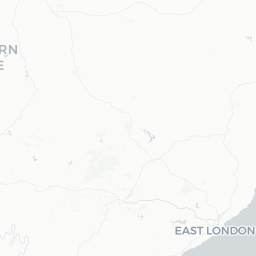
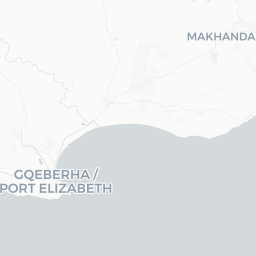
East London is the largest city in the Eastern Cape after Port Elizabeth (Gqeberha) and sits at the mouth of the Buffalo River on South Africa's Indian Ocean coast. With a population approaching half a million, it functions as the commercial and administrative hub of the Buffalo City Metropolitan Municipality. Its harbour, the only river port in the country, has shaped its economy for more than 150 years.
The city occupies a stretch of Indian Ocean coastline that draws surfers, swimmers, and anglers. Nahoon Reef, a right-hand point break a few kilometres east of the city centre, is internationally regarded among surf communities and has hosted professional competitions. Beyond the beaches, East London offers museums that trace colonial, apartheid-era, and Xhosa history — context that is essential for understanding the Eastern Cape more broadly.
East London tends to be a transit point for travellers moving between the Garden Route and the Wild Coast or KwaZulu-Natal, but it rewards those who spend a few days. The surrounding Buffalo City municipality includes townships such as Mdantsane — one of the largest in South Africa — and the small historic settler town of King William's Town (Qonce) nearby. Travellers comfortable with a mid-sized South African city will find East London relaxed, affordable, and genuine.
Before You Go
Visas
South Africa operates a visa regime that varies significantly by nationality. This guide does not list specific rules, which change and must be verified directly. Check TravelerPulse's Visas section for a starting point and confirm current requirements with the South African Department of Home Affairs (www.dha.gov.za) or the South African embassy or consulate in your country before travel.
Health
No routine vaccinations are required solely for visiting East London, but standard travel health advice for South Africa applies — confirm your general immunisations are up to date with a travel health clinic. East London itself is not in a malaria-risk zone, though parts of the Eastern Cape's northern reaches and neighbouring provinces can be. If you plan to continue inland or north, seek medical advice. Tap water in the city is generally treated, but verify locally if you are in any doubt.
What to pack
The climate is temperate oceanic. Summers (November–February) are warm and humid with frequent afternoon thunderstorms; pack light clothing plus a rain layer. Winters (June–August) are mild but can bring cool evenings and strong south-westerly winds — a fleece or light jacket is useful. UV radiation is intense year-round; sunscreen and a hat are essential. If surfing or swimming, rip currents and shore breaks can be powerful — check local conditions.
Getting There
By air
East London Airport (ELS) is located a few kilometres from the city centre. It is served by domestic routes from Johannesburg (O.R. Tambo) and Cape Town (Cape Town International), operated by South African Airways, FlySafair, Airlink, and other carriers — verify current schedules and availability directly with airlines or booking platforms, as routes change.
By road
East London lies on the N2 highway, which connects it westward toward Port Elizabeth (Gqeberha, roughly 300 km) and eastward toward the Wild Coast and KwaZulu-Natal. The N1 via Queenstown connects to Johannesburg. Intercity bus services — including Intercape, Greyhound (verify current operation), and Translux — connect East London to major South African cities; confirm schedules and book tickets through their respective websites or at the bus terminal. The drive from Cape Town is approximately 1,000 km; from Durban roughly 650 km.
By rail
Passenger rail services to East London exist in principle via Shosholoza Meyl, but South Africa's long-distance rail network has experienced significant disruptions and reduced services in recent years. Verify availability directly with Prasa (www.prasa.com) before planning rail travel.
Getting Around
East London's city centre, beachfront, and major suburbs are spread out in a way that makes walking impractical between districts. A private vehicle — either hired or personal — is the most flexible option for visiting beaches, the harbour area, and out-of-town attractions.
Minibus taxis are the primary public transport used by residents and operate on fixed informal routes across the city and to surrounding townships. They are inexpensive but can be confusing for first-time visitors; asking locally about specific routes is advisable. Metered taxis and app-based services such as Bolt operate in East London — verify current app coverage before arrival. Ride-hailing is generally the easiest option for visitors unfamiliar with the taxi system.
Car hire is available at the airport from national and international rental companies. An international driving permit alongside your home licence is advisable for foreign visitors, though requirements should be confirmed with your rental company. Traffic drives on the left in South Africa.
Things to See & Do
Beaches and surfing
East London has several beaches along its Indian Ocean coastline. Nahoon Beach and Nahoon Reef are the most well-known, with the reef offering consistent surf and the beach itself being popular for swimming when conditions allow. Orient Beach, closer to the city centre, is another popular swimming and recreational spot. Eastern Beach lies between the two. Always check conditions locally and swim at lifeguarded sections where flags are flying.
East London Museum
The East London Museum on Oxford Street holds collections spanning natural history, cultural history, and maritime heritage. It is home to the preserved coelacanth specimen — a fish long thought extinct before a specimen was caught off the Eastern Cape coast in 1938, making headlines internationally. The museum is a legitimate drawcard for anyone interested in natural history. Verify current opening hours and admission fees directly with the museum before visiting.
Ann Bryant Art Gallery
Housed in a late-Victorian building in the suburbs, the Ann Bryant Art Gallery holds South African fine art including works from the colonial period through to more contemporary pieces. It is one of the older public art galleries in the country. Confirm opening hours before visiting.
Harbour and Buffalo River
The harbour area reflects the city's identity as a river port. The waterfront has seen some redevelopment; it is worth a walk to understand the city's industrial and maritime character, though it is less tourist-oriented than the V&A Waterfront in Cape Town.
Surroundings and day trips
The Amathole Mountains to the northwest offer hiking, waterfalls, and historical sites connected to the Frontier Wars. The Mpongo Game Reserve, located outside the city, offers a malaria-free wildlife experience — verify access, opening times, and what species are present directly with the reserve. King William's Town (Qonce) nearby has the Amathole Museum, which covers Eastern Cape history including significant chapters in South African political history.
Food & Drink
East London's food scene reflects its mid-sized South African city character — practical, unpretentious, and with some genuinely good options. Seafood features strongly given the coastal location; fresh fish, crayfish (rock lobster, subject to strict seasonal regulations), and calamari appear on many menus. Braai culture is deeply embedded in daily life throughout the Eastern Cape, and social meals cooked over open fire are common in residential settings.
The Quigney area along the beachfront and parts of Vincent and Berea suburbs have concentrations of restaurants and cafés. Mall-based dining is prevalent, with Hemingways Mall being one of the larger centres. Independent restaurants, cafés, and local eateries can be found throughout the city; the range spans South African staples, grills, Indian-influenced food (reflecting the region's history), and international cuisine.
For self-catering travellers or those wanting to experience everyday life, the city's supermarkets and fresh produce markets are worth exploring. Street food and informal food vendors operate across the city, selling items such as bunny chow, kotas, and grilled meats — popular and affordable options for travellers comfortable with informal food settings.
Alcohol is widely available at restaurants, bars, and bottle stores (liquor stores). Legal drinking age is 18. Tap water quality should be verified locally if you have concerns.
Practical Information
Money
The South African Rand (ZAR) is the currency. ATMs are widely available in shopping centres, the airport, and the city centre. Major credit and debit cards are accepted at most formal establishments. Inform your bank before travel to avoid cards being blocked for overseas transactions. Smaller informal vendors and street traders typically operate cash-only.
Connectivity
Mobile data coverage in East London is generally good across the major networks (Vodacom, MTN, Cell C, Telkom). Tourist SIM cards can be purchased at the airport or mobile network stores; you will need to present your passport. Free Wi-Fi is available at some shopping centres and accommodations — verify before relying on it.
Electricity
South Africa uses the Type M plug (large round three-pin) at 230V/50Hz. Some accommodations also accommodate Type C or D sockets. Load shedding — scheduled power cuts managed by the national utility Eskom — has affected South Africa intermittently in recent years. Ask your accommodation about backup power arrangements and check Eskom's schedule (www.eskom.co.za) for current status.
Accommodation
East London offers a range of accommodation from guesthouses and B&Bs in the beachfront Quigney district and suburbs, to larger hotels near the airport and business district. Self-catering apartments are available. Book directly or through established platforms and verify current pricing and availability, particularly during school holidays and surf events.
Safety
East London, like most South African cities of its size, requires standard urban awareness from travellers. Petty crime — bag snatching, opportunistic theft — occurs particularly in the city centre, at beaches, and around transport hubs. Avoid displaying expensive jewellery, cameras, or phones unnecessarily, and do not leave valuables visible in parked vehicles.
The city centre has areas that are less comfortable on foot after dark. The beachfront and suburbs such as Vincent, Berea, and Beacon Bay are generally more relaxed environments for visitors, though no area is entirely without risk. Ask your accommodation for current, locally-specific safety advice, which is more reliable than generalised guidance.
Swimming safety is a real concern — the Indian Ocean beaches here have rip currents and shore breaks that can be hazardous. Swim only at lifeguarded beaches, within the flagged zones, and follow any instructions from beach lifeguards. Nahoon Reef in particular is a surf break, not a safe general swimming area.
For emergencies, South Africa's national emergency number is 112 (from a mobile phone) or 10111 (police). Medical facilities in East London include Frere Hospital (public) and several private hospitals; verify the closest appropriate facility to your accommodation on arrival.
Local Culture & Etiquette
East London sits at the heart of what was historically known as the Cape Frontier, the contested borderland between the Cape Colony and the Xhosa kingdoms through the eighteenth and nineteenth centuries. This history — including the Frontier Wars and the forced removals of the apartheid era — is present in the landscape and in the Eastern Cape's political identity. The region produced Nelson Mandela, Walter Sisulu, Steve Biko, and other central figures of the anti-apartheid movement; understanding this context enriches any visit.
IsiXhosa is the home language for a large portion of the population. Greetings in isiXhosa are appreciated — 'Molo' (singular) or 'Molweni' (plural) are basic greetings you will encounter. English is widely understood in commercial settings. Afrikaans is spoken in some communities. Travellers accustomed to culturally diverse urban environments will find East London familiar in its layered social landscape.
Mdantsane, one of the largest townships in South Africa, is part of the Buffalo City municipality. Township tourism exists in East London as it does in other South African cities — if you wish to visit, doing so through a reputable locally-run guide or tour operator is strongly advised, both for orientation and for ensuring the visit is conducted respectfully and with benefit to local communities.