Translate


Overview
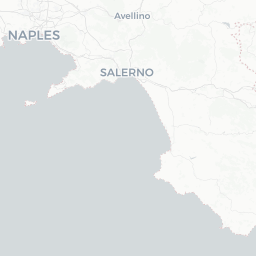
Scala is a small mountain village of roughly 1,100 residents perched in the hills above Ravello and the Amalfi Coast, in the Province of Salerno, Campania. At an elevation of around 370 metres, it offers sweeping views across the Valle del Dragone and toward the Tyrrhenian Sea—without the summer congestion that characterises the coast below.
Historically, Scala is considered one of the oldest inhabited settlements in the Amalfi area, predating the maritime republic of Amalfi itself. Its medieval centro storico retains a quiet, lived-in character: stone lanes, religious architecture, and small piazzas where daily life carries on largely for residents rather than tourists.
For travellers, Scala functions best as either a half-day excursion from Ravello (roughly 2 km away by road, though steep footpaths connect them more directly) or as an unusually peaceful overnight base from which to visit the better-known Coast towns. Expect limited tourist infrastructure; this is a working village, not a resort.
Before You Go
Visas
Italy is a Schengen Area member. For visa requirements specific to your nationality, visit TravelerPulse's Visas section and cross-reference with the official Italian immigration authority or your nearest Italian consulate.
What to pack
- Sturdy walking shoes are essential; Scala's lanes and the footpaths connecting it to Ravello and surrounding hamlets (frazioni) involve uneven stone steps and steep gradients.
- Layers are useful even in summer—hilltop evenings can be noticeably cooler than the coast.
- Cash is advisable; ATMs in very small villages like Scala are scarce. Carry euros withdrawn in a larger nearby town.
Connectivity
Mobile coverage (Italian operators) generally reaches the village, but can be patchy on some outlying trails. Verify roaming arrangements before travel if you are arriving from outside the EU.
Getting There
Scala has no train station or commercial airport. The nearest major airports are Naples Capodichino (NAP), approximately 60–70 km away, and Salerno Costa d'Amalfi Airport (QSR), which handles seasonal routes and is closer in distance but not always the most practical option—verify current flight availability before planning around it.
By car
Driving is the most flexible option, though the roads approaching Scala from the Amalfi Coast (SS163 and then uphill toward Ravello and Scala) are extremely narrow and winding. Parking in the village is very limited. Many visitors park in Ravello and walk or take a local bus/taxi the short remaining distance.
By bus
SITA Sud operates bus routes along the Amalfi Coast and up to Ravello; from Ravello, local connections or a short walk reach Scala. Schedules change seasonally—verify current timetables on the SITA Sud website or locally before travel.
By taxi / private transfer
Private transfers from Naples, Salerno, or Amalfi Coast towns can be arranged through local operators. Agree on the price in advance.
Getting Around
Within Scala itself, movement is almost entirely on foot. The village and its scattered hamlets (frazioni such as Pontone, Campidoglio, and Minuto) are connected by a network of ancient stone mule tracks and steps. These paths are part of the wider trail network that links the Amalfi Coast hinterland and are well-suited to unhurried walkers.
Between Scala and Ravello, a footpath descends steeply and takes roughly 30–45 minutes depending on your pace and the specific route. The road distance is longer but manageable by car or taxi. There is no local public transit loop within the village itself—verify locally whether any seasonal shuttle services operate.
If you plan to day-trip to Amalfi, Positano, or other Coast towns, factor in that road travel in the area is slow; journey times are longer than raw distances suggest.
Things to See & Do
Cattedrale di Sant'Agatha (Duomo di Scala)
Scala's cathedral, dedicated to Saint Agatha, is the village's most significant monument. The structure has Romanesque origins and was modified over subsequent centuries. Its interior contains notable artworks and decorative elements; visiting hours vary and are subject to change—check locally or at the door.
Walking the frazioni
Scala is not a single nucleated village but a municipality made up of several hamlets. Walking between them—through terraced lemon groves, chestnut woods, and past small chapels—is one of the most rewarding activities. The hamlet of Pontone, reachable on foot, sits above the Valle del Dragone and gives access to paths toward the Convento di San Nicola di Mira (verify accessibility before visiting).
Hiking to Ravello and beyond
Marked trails connect Scala to Ravello, and from there the path network extends toward Minori on the coast. The Sentiero degli Dei (Path of the Gods) is further west, but the local trail network here offers comparably dramatic scenery with far fewer hikers.
Panoramic viewpoints
Several spots around the village and its surrounds offer views across the valley and toward the sea. These require no admission and reward early-morning visits when light and visibility are typically at their best.
Food & Drink
Dining options in Scala are limited given the village's size. There are a small number of local restaurants and agriturismi in the municipality; offerings reflect straightforward Campanian cooking—pasta, locally grown lemons and chestnuts, cured meats, and regional cheeses. Reservations are advisable even for modest establishments, as capacity is small.
The Amalfi Coast hinterland is known for its sfusato amalfitano lemons, and products made from them (limoncello, lemon-infused pastries, preserved lemons) appear throughout the area. Chestnuts from the Lattari Mountains also feature in local cooking in autumn.
For a wider range of restaurants, cafés, and bars, Ravello is the practical option—a short drive or walk away. Amalfi town, further down the coast, has considerably more choice but requires more travel time.
Practical Information
Money
Scala has no reliable ATM infrastructure at village scale—verify locally, but plan to carry cash obtained in Ravello, Amalfi, or Salerno.
Medical and emergency services
The village is small and does not have a hospital. The nearest significant medical facilities are in Salerno or through the Ospedale Costa d'Amalfi in Castiglione di Ravello (a small local hospital—verify current services). In any emergency, dial 112 (the EU-wide emergency number, operative in Italy).
Postal and communications
Basic postal services may be available; verify locally. Mobile internet (4G) is generally functional in the village centre but can drop on mountain trails.
Accessibility
Scala is not well suited to travellers with limited mobility. Stone steps, steep gradients, and uneven surfaces are the norm throughout the village and its connecting paths. Driving to specific points may allow partial access—verify locally.
Safety
Scala is a quiet, low-crime village. Standard travel precautions apply: secure valuables, be aware of your footing on steep and sometimes slippery stone paths (particularly after rain), and carry water and sun protection on summer hikes.
The mountain environment means weather can change quickly; check forecasts before setting out on longer walks. Mobile signal is not guaranteed on all trails, so sharing your planned route with someone before hiking remotely is a sensible precaution.
Local Culture & Etiquette
Scala observes Catholic traditions that shape the rhythm of village life. Local feast days and religious processions occur throughout the year, particularly around the feast of Sant'Agatha (the patron saint) and other liturgical calendar dates—verify exact dates locally, as these vary year to year.
As with all small Italian communities, a basic awareness of local customs is appreciated. Dress modestly when entering the cathedral or other religious sites. Greetings in Italian (buongiorno, buonasera) go a long way in a village where international tourism remains relatively light. The pace of life is slow and resident-oriented; adjust expectations accordingly.